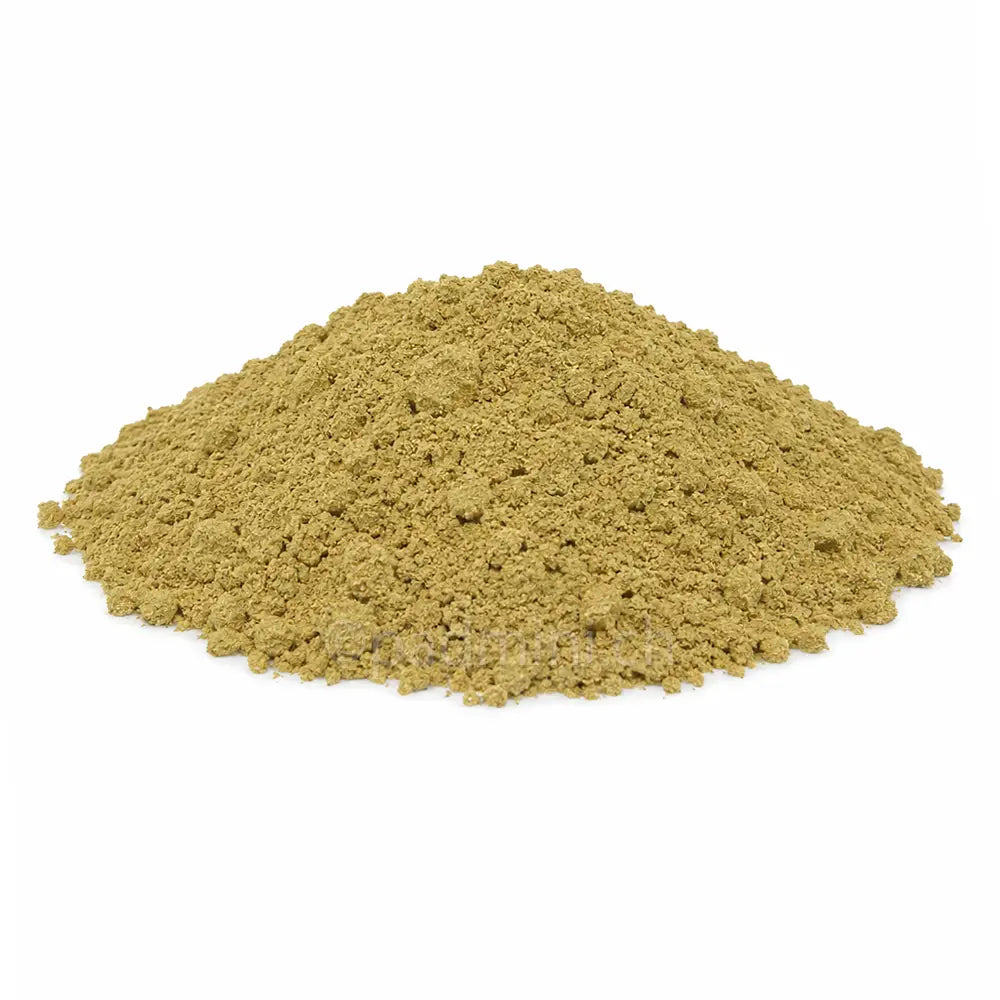
Asafoetida Powder 40 g – Hing & Fenugreek for Incense Burning
Asafoetida Powder 40 g – Hing & Fenugreek for Incense Burning
0352
Couldn't load pickup availability
Product description
Asafoetida, also known as asant, hing or devil's dung, is an unusual incense material with an unmistakably intense odour. The asafoetida used is a gum resin obtained from plants of the genus Ferula. Its fragrance, characterised by sulphur compounds, is strongly reminiscent of garlic and onions in concentrated form. It is precisely this penetrating odour that accounts for much of its traditional and magical symbolism: in various traditions, asafoetida is regarded as a powerful substance for warding off evil, driving away unwanted spirits and protecting against negative influences.
The powder offered here consists of asafoetida and fenugreek powder. Such blended hing powders are considerably easier to measure out than the pure, hard and sticky gum resin. The product can also be used as a spice, although this description focuses on its use for incense burning.
Why is asafoetida called “devil's dung”?
Few other natural incense materials have such a striking name. The name “devil's dung” refers to asafoetida's exceptionally strong, sulphurous and garlic-like odour. The botanical or Latin name element foetida also refers to its smell, which is often perceived as unpleasant.
What may initially seem off-putting in a culinary context is also one of hing's distinctive qualities: when heated in food, its aroma changes considerably, developing a spicy character reminiscent of onions and garlic. When burned as incense, however, it is precisely its powerful, penetrating character that is of interest.
An incense material believed to drive away evil
Asafoetida's exceptional significance in protective and banishing incense rituals is closely linked to its odour. In various folk-magical and spiritual traditions, this strongly scented substance is believed not only to be noticeable to humans but also, according to traditional beliefs, to drive away evil spirits, demons and unwanted influences.
The underlying idea is particularly vivid: something that is almost impossible for the human nose to ignore is also believed to drive unwanted presences out of a space. Historical folklore sources from South Asia do indeed describe the belief that foul odours can keep evil spirits away, explicitly mentioning asafoetida in this context.
In later and contemporary magical traditions, this protective symbolism developed further. Asafoetida is used in incense rituals for protection, banishing and exorcism, as well as for symbolically driving away negative energies. It can therefore be used in incense rituals intended to establish a strong symbolic boundary around a space against influences perceived as negative or unwanted.
Protection, banishing and setting boundaries
Compared with many plants more generally associated with purification or harmony, asafoetida has a particularly powerful protective and warding-off symbolism. In contemporary incense practices, it is therefore used less for gentle atmospheric purification than for situations in which protection and setting boundaries are the main focus.
Its traditional and contemporary symbolic associations include, in particular:
- Protection against evil or unwanted influences
- Driving away evil spirits and demons
- Banishing and protective incense rituals
- Protection against negative energy
- Symbolic purification of spaces perceived as heavily burdened by negative influences
These applications belong to the realm of folk beliefs, magic and spiritual incense practices. They certainly do not mean that any objective effect on spirits, demons or so-called negative energies has been scientifically demonstrated.
Intense, sulphurous and garlic-like
Asafoetida is not an incense material primarily used for a pleasantly perfumed fragrance. Its characteristic odour is intense, sulphurous, spicy and distinctly reminiscent of garlic and onions. Yet this olfactory intensity is inseparable from its traditional use as a substance for warding off unwanted influences.
Only a very small amount is therefore needed for incense burning. The powder can be carefully placed on incense charcoal; because of its intense odour, good ventilation is recommended both during and after use. Anyone burning asafoetida as incense for the first time should begin with a particularly small quantity.
Hing – between cooking and incense traditions
Alongside its use in incense and protective rituals, asafoetida has a very different tradition that remains widespread today: known as hing, it is a familiar spice in Indian cuisine. Commercially available powders are often blended with a carrier ingredient, making them easier to measure out than the pure gum resin.
This culinary use should be considered separately from the beliefs surrounding incense burning. Traditional claims concerning digestion and other physical effects of hing relate to its use as a spice or in other preparations, not to inhaling its smoke.
- Names: asafoetida, asant, hing, stinkasant, devil's dung
- Botanical origin: gum resin from Ferula species
- Plant part used: gum resin obtained from underground plant parts
- Blend: asafoetida with fenugreek powder
- Main origin of the asafoetida: Iran
- Form: powder
- Odour when burned: very intense, sulphurous, spicy, garlic-like and onion-like
- Use: for incense burning in very small quantities; also suitable for use as a spice blend
- Net weight: 40 g