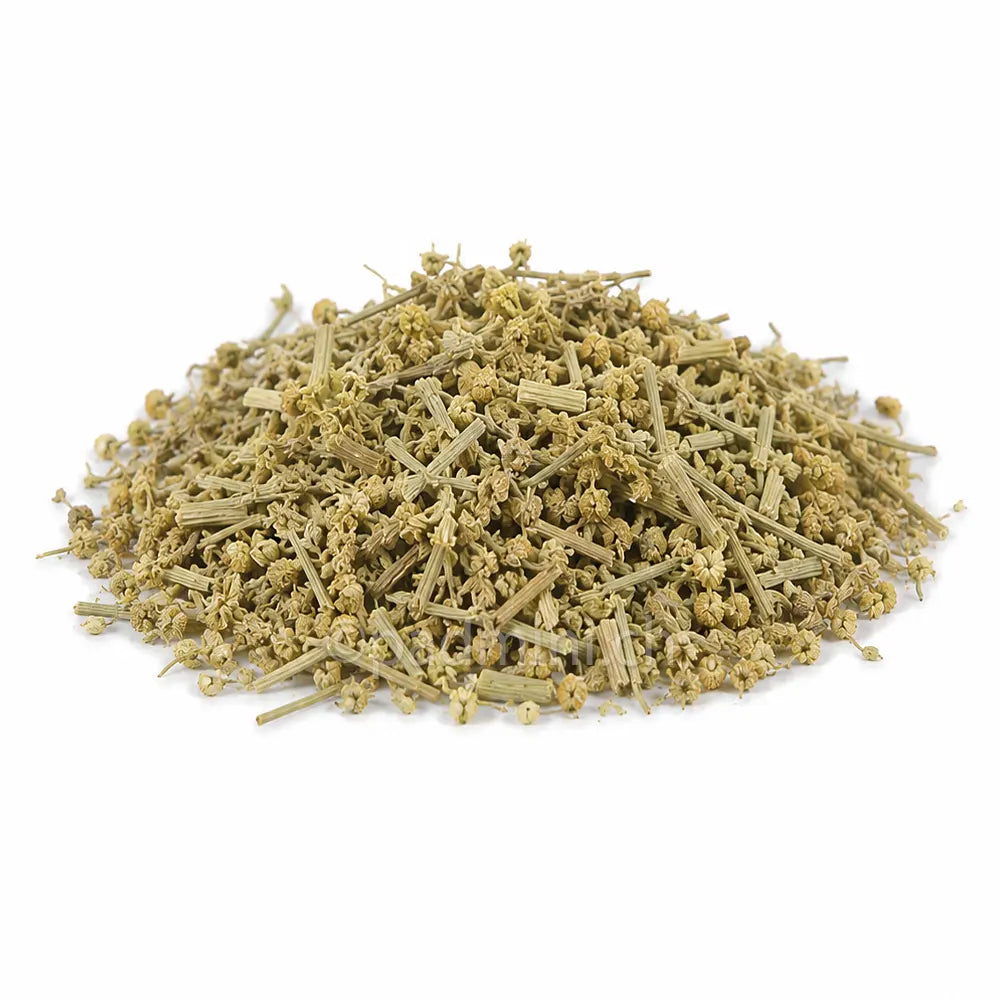
Cut Wormwood Herb 50 g – Artemisia absinthium for Incense Burning
Cut Wormwood Herb 50 g – Artemisia absinthium for Incense Burning
1429
Couldn't load pickup availability
Product description
Cut wormwood herb (Artemisia absinthium) is a traditional, intensely aromatic plant with a distinctive bitter, herbal and earthy fragrance. When burned as incense, its character is dry and bitter-aromatic, sometimes with warm, spicy nuances. In contemporary incense practices, wormwood is primarily associated with protection, symbolic purification, setting boundaries and transitions.
Artemisia absinthium, commonly known as wormwood, belongs to the Asteraceae family. This perennial plant is native to large parts of Europe, as well as regions of North Africa and Asia. It has a long history in European herbal traditions and has been known for centuries for its distinctly bitter character.
Wormwood, mugwort and other Artemisia species
Wormwood should not be confused with common mugwort (Artemisia vulgaris). Both belong to the same genus and have a long cultural history, but they are botanically distinct species with different fragrance characteristics and traditions. Artemisia annua is also a separate species.
The cut wormwood herb offered here consists of dried plant material. The visible stems and other above-ground plant parts illustrate why the description wormwood herb is more appropriate for this product than referring exclusively to “leaves”.
Bitter, herbal and earthy
When burned as incense, wormwood develops a herbal, earthy and distinctly bitter fragrance. Its dry, bitter-aromatic character can have a slightly medicinal quality and, depending on the heat applied, may also develop warm, spicy nuances. This is a pronounced herbal fragrance, clearly different from sweet woods, flowers or balsamic resins.
In particular, its fragrance should not be equated with the aniseed aroma of the alcoholic drink known as absinthe. The drink's characteristic aromatic profile comes from a combination of different plants and ingredients and does not describe the fragrance of pure Artemisia absinthium.
Wormwood herb can be used on its own or as a distinctive herbal component in incense blends. An incense burner with a mesh screen is particularly suitable for allowing the fragrance to develop more slowly. When using suitable incense charcoal, the lightweight plant material should be added sparingly, as burnt notes can quickly dominate at high temperatures.
Protection, purification and setting boundaries
In contemporary spiritual and esoteric incense practices, wormwood is particularly associated with protection and symbolic purification. It is used in incense rituals intended to ward off unwanted influences or those perceived as negative, and to consciously give a space a new sense of direction.
Another association concerns setting boundaries. Wormwood can symbolically accompany incense rituals centred on personal boundaries, detachment or the desire to distance oneself from burdensome influences. In this context, the plant is also associated with protection against influences perceived as hostile or harmful.
These beliefs belong to spiritual and folk-magical practices. There is no evidence that wormwood drives away negative energies, spirits or other supernatural influences.
Letting go, transitions and new beginnings
Wormwood's symbolism is also suited to rituals of transition and renewal. In some contemporary incense practices, it accompanies the intention to consciously leave the past behind, bring a situation to a close or begin a new chapter.
Its symbolism therefore differs, for example, from the sunnier and more joyful associations of orange peel: wormwood places greater emphasis on setting boundaries, letting go and consciously moving through a transition. Its bitter herbal character complements this more restrained, powerful form of incense burning.
Intuition, dreams and divination
Some esoteric traditions also associate wormwood with intuition, dreams and divination. In these practices, it may accompany incense rituals intended to support meditation, personal introspection or symbolic divinatory practices.
These associations should also be understood as spiritual traditions. Burning wormwood as incense has not been shown to induce visions, lucid dreams or altered states of consciousness. In particular, the plant should not be presented as a “hallucinogenic incense” because of its thujone content.
A traditional European herb
Wormwood has a long history in European herbal traditions. The plant is mentioned in ancient texts and later appears in medieval herbals. It became particularly well known as an exceptionally bitter herb; much later, wormwood also became one of the characteristic botanical ingredients of the spirit absinthe.
However, this long medicinal, culinary and aromatic history does not automatically establish an equally ancient tradition of burning the plant as incense. Its contemporary spiritual uses should therefore be distinguished from the historically documented applications of the plant.
- Botanical name: Artemisia absinthium L.
- Family: Asteraceae
- Common name: wormwood
- Plant part used: dried herb
- Origin of the current product: Serbia
- Form: cut
- Fragrance when burned: bitter, herbal, earthy, dry and slightly warm-spicy
- Use: for incense burning, on its own or in incense blends
- Net weight: 50 g