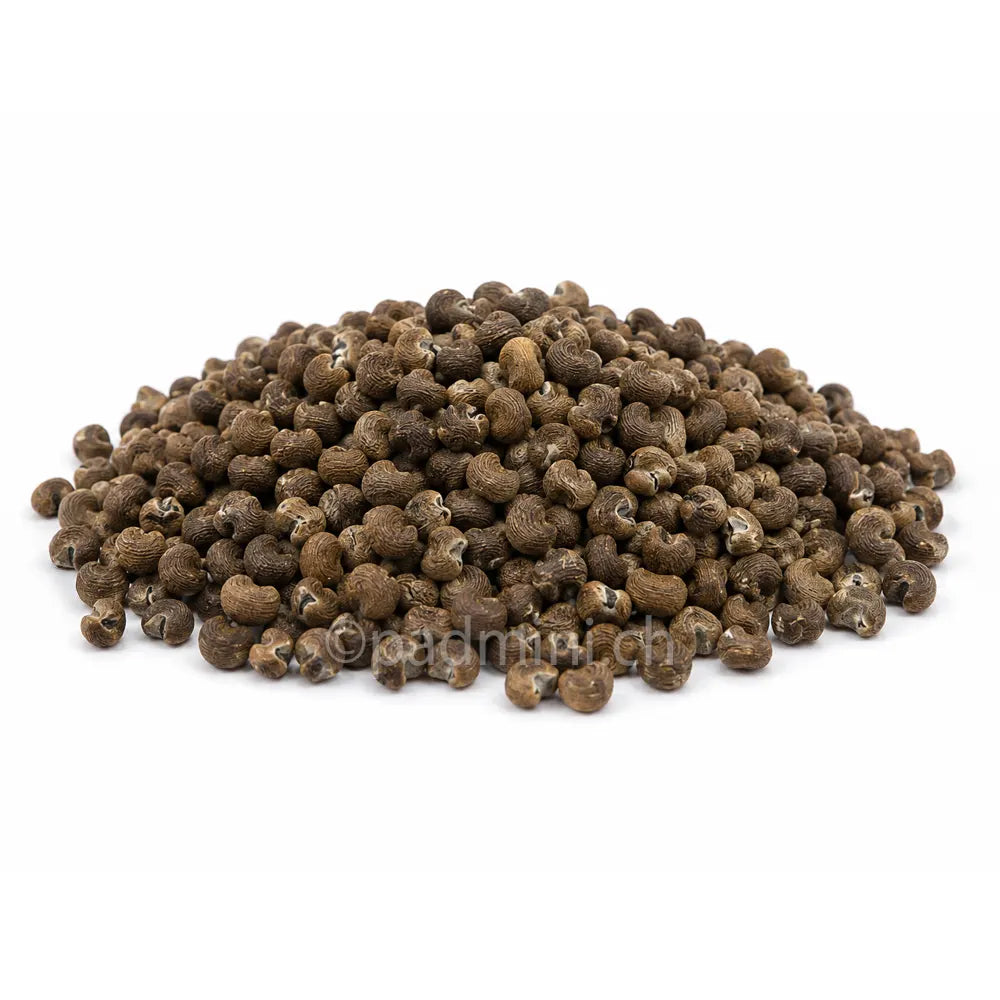
Ambrette Seeds 40 g – Abelmoschus moschatus for Incense Burning
Ambrette Seeds 40 g – Abelmoschus moschatus for Incense Burning
0434
Couldn't load pickup availability
Product description
Ambrette seeds (Abelmoschus moschatus), also known as musk seeds, are the aromatic seeds of a tropical plant belonging to the mallow family. When burned as incense, they develop an unusual musky, soft and slightly sweet-balsamic fragrance with a subtle animalic nuance. This musk character is entirely of plant origin and makes ambrette seeds a distinctive ingredient for incense blends.
Abelmoschus moschatus is originally native to tropical and subtropical Asia and is now cultivated in various warm regions. The aromatic seeds have long been known as a fragrance material and are also used in perfumery. Extracts from ambrette seeds have been used particularly as a plant-based alternative to animal musk, although they possess their own distinctive fragrance profile.
Plant-based musk with a long fragrance tradition
The characteristic fragrance of ambrette seeds explains names such as musk seeds or musk grains. They are neither animal musk nor ambergris. The natural seeds of Abelmoschus moschatus should also not be confused with “Musk Ambrette”, the name of a synthetic fragrance compound.
One of the natural aromatic compounds found in ambrette is ambrettolide, which contributes significantly to the characteristic musk profile of the seeds. In perfumery, ambrette extracts may also display fruity, floral, earthy or liqueur-like facets depending on the extraction and processing method. When the whole seeds are burned as incense, however, their soft, musky and slightly balsamic character comes to the fore.
Musky, soft and slightly balsamic
When burned as incense, ambrette seeds release a musky, soft and slightly sweet fragrance with a balsamic character. A subtle animalic facet can enhance the impression of musk, even though the material is entirely plant-based.
The seeds can be used on their own in small quantities or as an aromatic component of an incense blend. Their musky character particularly complements warm woody, resinous and floral fragrances. In olfactory terms, they can be combined, for example, with sandalwood, benzoin, rose or patchouli.
Ambrette seeds are also documented as an ingredient in incense preparations and Indian incense sticks, or agarbattis. They are therefore significant not only in perfumery but also as a botanical ingredient in traditional and modern fragrance compositions for incense burning.
Sensuality, love and attraction
The musky character of ambrette also shapes its symbolic associations. In contemporary incense practices, the seeds are particularly associated with sensuality, love and interpersonal attraction. They can be used in incense blends whose ritual intention is love, closeness or an intimate atmosphere.
This symbolism is also connected with the traditional reputation of Abelmoschus moschatus as an aphrodisiac plant. However, this does not imply an aphrodisiac effect from the smoke. Its use in incense rituals associated with love and sensuality should be understood as a traditional or spiritual association.
Other symbolic associations
In contemporary esoteric incense practices, ambrette seeds are also sometimes associated with protection against negative influences and harmful magic. Unlike the symbolism of sensuality and attraction, however, no equally well-documented older cultural tradition can be established for this association. It should therefore be understood as a contemporary spiritual interpretation.
Ambrette in traditional herbal practices
The seeds of Abelmoschus moschatus are also known from various traditional herbal applications. Ethnobotanical sources report, among other things, their use as a strengthening remedy and for digestive complaints, as well as their traditional reputation as an aphrodisiac. These applications involve other forms of preparation and cannot be transferred to the use of the seeds as an incense material or to their smoke.
- Botanical name: Abelmoschus moschatus Medik.
- Family: Malvaceae
- Other names: ambrette seeds, musk seeds, musk grains
- Plant part used: seeds
- Origin of the current product: India
- Form: whole dried seeds
- Fragrance when burned: musky, soft, slightly sweet and balsamic with a subtle animalic note
- Use: for incense burning and incense blends
- Net weight: 40 g