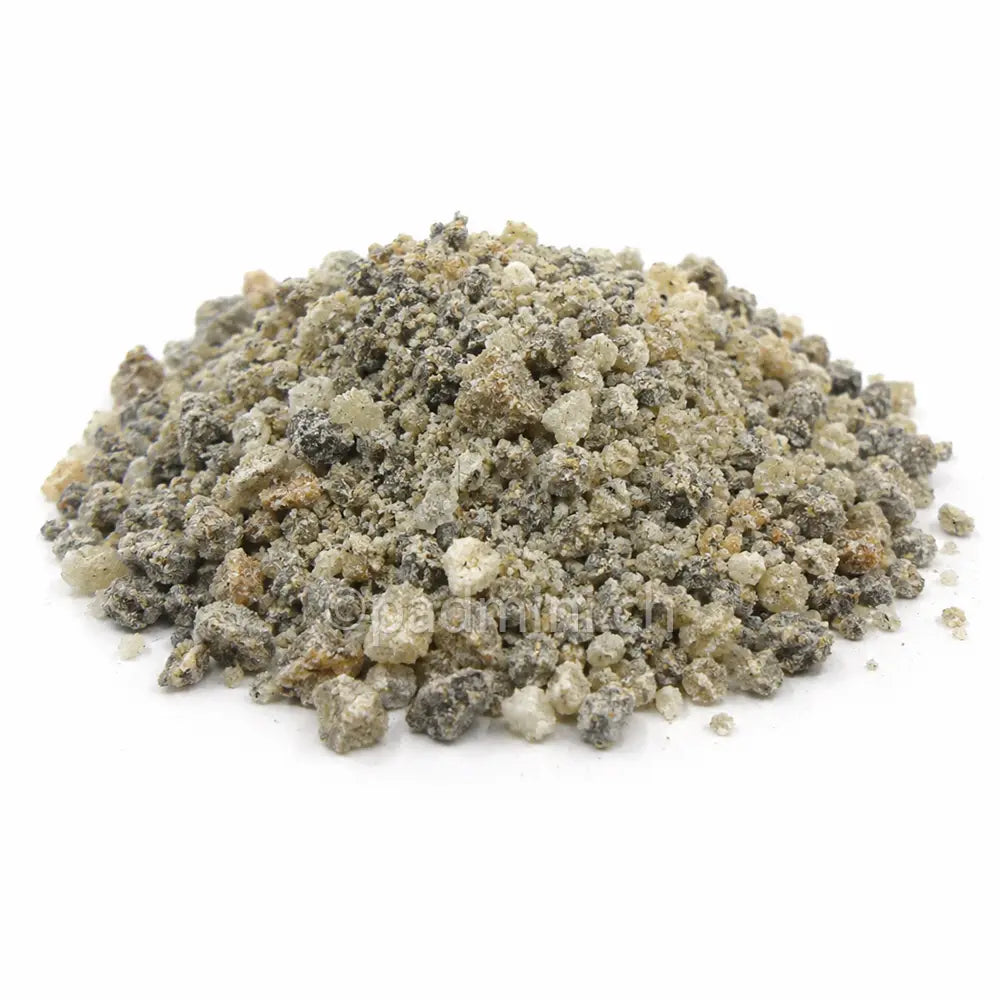
Black Copal – Copal Negro from Mexico 25 g
Black Copal – Copal Negro from Mexico 25 g
0312
Couldn't load pickup availability
Product description
Black Copal from Mexico, also known by its Spanish name Copal negro or as Copal de piedra, is a natural incense resin from the tree Bursera bipinnata. Unlike the pale, deliberately harvested Copal blanco, this darker variety forms from resin exudations that occur naturally on the tree. Its unrefined appearance and strong, earthy fragrance when burned make it a distinctive quality among traditional Mexican copal resins.
The irregular resin pieces display various shades of brown and grey, sometimes with an almost black surface. When broken, they often reveal lighter resin areas ranging from beige to amber. Small inclusions of bark and other natural plant material are part of this copal's characteristic appearance.
Copal negro – a natural resin from Bursera bipinnata
The copal tree Bursera bipinnata belongs to the Burseraceae family, which also includes the trees from which frankincense and myrrh are obtained. It grows in Mexico and parts of Central America, particularly in relatively dry tropical deciduous forests.
Copal harvesting has a long tradition in Mexico. It is particularly well documented in the Upper Balsas region, including the states of Puebla, Morelos and Guerrero. People who specialise in harvesting the resin are known as copaleros.
The name copal comes from the Nahuatl word copalli, which refers to an aromatic resinous substance or incense. The term is not a botanical species name: in Mexico and other parts of the Americas, various resins from different tree species are referred to as copal.
What distinguishes black copal from white copal?
One distinctive feature of Bursera bipinnata is that the same tree can produce both pale and dark copal. The differences arise primarily from the way the resin emerges, how it is harvested and the natural materials that become incorporated into it.
White copal – Copal blanco: For this quality, the bark is traditionally cut deliberately. The resin that flows out can be collected in a controlled manner, producing comparatively pale and clean resin pieces.
Black copal – Copal negro: This variety forms from natural resin exudations, for example from small injuries to the bark that may be caused by insects. The resin remains on the trunk for longer, coming into contact with bark, wood particles and its surroundings. Through ageing, oxidation and natural inclusions, it develops its darker, irregular appearance.
The description “black” therefore does not mean that the resin must be completely black or that it has been artificially coloured. Pale, yellowish or slightly translucent areas are also natural features of Copal negro.
Black copal is occasionally also called Copal de piedra, which can be loosely translated as “stone copal”. The name reflects its often compact, irregular pieces with a dark, stone-like surface.
Fragrance profile – strong, balsamic and earthy
When burned, black copal develops a distinctive fragrance that is predominantly resinous and balsamic. Compared with carefully harvested pale copal, it often has a stronger, woodier and earthier character. Depending on the individual resin piece and the temperature, slightly smoky, dry or spicy nuances may emerge.
The lighter resin areas can also release fresher and softer fragrance notes. Because of the natural inclusions and differences in the composition of individual pieces, the fragrance experience may vary slightly within a single pack.
Copal negro is particularly suitable for those who appreciate natural incense resins with a pronounced, less refined fragrance character.
Copal in the incense traditions of Mesoamerica
Copal is one of the most important aromatic incense substances of Mesoamerica. Long before the arrival of the Spanish, the resin was used in religious ceremonies, offerings and communal rituals.
Bursera bipinnata is also particularly significant in this historical context. Archaeological investigations of the Templo Mayor in the former Tenochtitlan, present-day Mexico City, have identified resin and plant remains from this tree species in ritual offerings.
The resin was not only burned but could also be shaped into balls, cones, figures and other objects used as offerings. In various Indigenous traditions, the rising fragrance was regarded as a valuable offering to the deities and a symbolic connection between the human and sacred worlds.
These incense traditions are not exclusively part of the past. Copal continues to be used in various regions of Mexico for religious, communal and family occasions. Specific customs differ according to the community, region and religious background.
Offerings, rain ceremonies and ritual purification
In various Mesoamerican traditions, copal accompanies prayers and offerings associated with nature, agriculture and communal life.
Traditional contexts of use include, in particular:
- Rain and fertility: incense burning associated with prayers for rain, fertile soil and good harvests.
- Agricultural ceremonies: offerings during sowing and harvesting, particularly in connection with maize cultivation.
- Veneration of nature: incense burning in honour of mountains, water, fire, the sun and other natural forces venerated in the respective traditions.
- Gratitude: aromatic offerings expressing thanks for gifts received and the solidarity of the community.
- Remembrance of the deceased: incense burning on altars and during ceremonies commemorating ancestors.
- Ritual purification: traditional incense burning involving people, places and objects as a symbolic element of religious and cultural practices.
Black copal is also used in certain rain ceremonies. Its dense, darker smoke can symbolically evoke rain clouds. This meaning is known from particular regional traditions and cannot be applied to all copal incense rituals.
Copal negro and Día de Muertos
Copal also holds an important place in the Mexican Día de Muertos, the Day of the Dead. Traditional family altars, known as ofrendas, feature offerings that include flowers, food, candles and aromatic incense substances.
According to traditional belief, the fragrance of copal accompanies remembrance of the deceased and symbolically helps guide them towards the family's offering. The rising cloud of smoke also expresses the connection between the living and those being remembered.
Different qualities of copal are used during these celebrations. Copal negro is one of the traditional Mexican incense resins, but it is not the only type of copal used for this occasion.
How to burn black copal
Copal negro quickly produces intense smoke when exposed to direct heat. It is therefore advisable to begin with just a small piece and gradually increase the amount if needed.
On incense charcoal: Place a small amount of resin on incense charcoal that is fully glowing and has turned grey on the surface. This method produces strong, dense smoke and closely resembles the traditional practice of burning copal on glowing charcoal.
On an incense burner: For a slower release of fragrance, the copal can be warmed on a suitable incense mesh or an adjustable resin burner. A moderate temperature allows the resin to melt gradually and can prevent the natural bark particles from burning immediately.
Black copal can be burned on its own or combined with other incense resins, aromatic woods and plants. A small amount is sufficient for a personal incense ritual, meditation or moment of remembrance.
Always place the incense vessel on a stable, heat-resistant surface and never leave it unattended. Keep children and pets away, avoid directly inhaling the smoke and ventilate the room thoroughly after burning the incense. This product is intended exclusively for incense burning and is not suitable for consumption.
Product characteristics
- Product: Black Copal – Copal negro
- Botanical name: Bursera bipinnata
- Plant family: Burseraceae
- Origin: Mexico
- Plant part used: naturally exuded resin
- Appearance: irregular resin pieces in shades of beige, brown and grey to almost black
- Fragrance character: resinous, balsamic, woody, earthy and slightly smoky
- Available forms: natural resin pieces or powder with small fragments
- Net contents: 25 g per pack
- Use: for burning on charcoal or a suitable incense burner