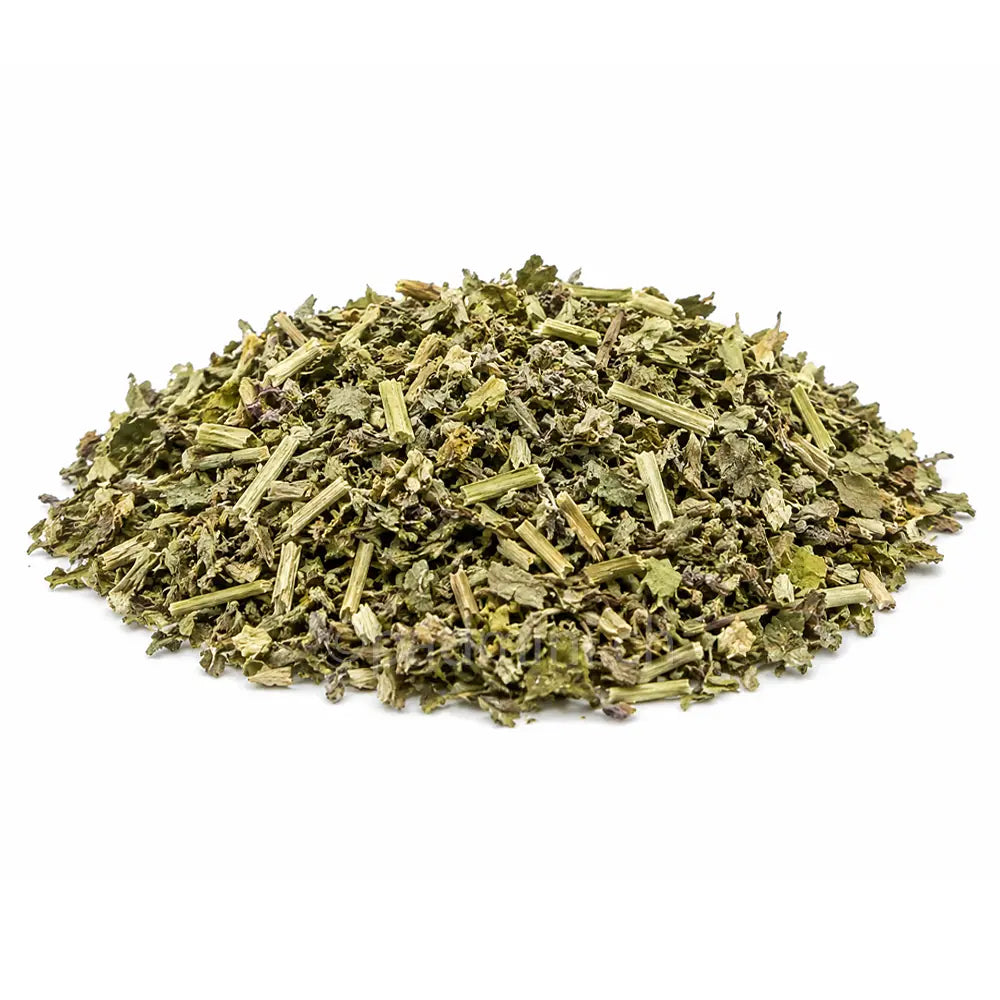
Catnip Herb 50 g – Nepeta cataria for Incense Burning
Catnip Herb 50 g – Nepeta cataria for Incense Burning
1426
Couldn't load pickup availability
Product description
Cut catnip herb (Nepeta cataria) is an aromatic plant belonging to the mint family. When burned as incense, the dried herb develops a herbal, minty and fresh aromatic fragrance. In contemporary spiritual and folk-magical practices, catnip is primarily associated with love, attraction, charm and good fortune in personal relationships.
Nepeta cataria, commonly known as catnip, belongs to the Lamiaceae family. Its natural distribution extends across large parts of the Old World, from Europe to Asia. Today, the plant is also widespread in numerous other regions. It should not be confused with so-called cat grass, grown from young cereal shoots, or with other Nepeta species and garden hybrids.
Herbal, minty and fresh
When burned as incense, catnip has a herbal and minty fragrance with a fresh aromatic note. Although it belongs to the mint family, like true mints, it is not peppermint and should not be considered identical in fragrance. Its character remains more herbal and less distinctly menthol-like.
The cut herb can be used on its own or as an ingredient in incense blends. Gentle heating on an incense burner with a mesh screen is suitable for allowing the fragrance to develop more slowly. When using suitable incense charcoal, the lightweight plant material should be added sparingly. As with all incense materials, good ventilation is recommended.
Love, attraction and charm
In certain contemporary folk-magical and esoteric practices, catnip is particularly associated with love, attraction and good fortune in matters of the heart. The herb is used, for example, in incense rituals intended to symbolically accompany love, affection or connections between people.
Charm, seduction and a playful, light-hearted form of affection are also among catnip's modern associations. In some practices, the striking interest that many cats show in the plant is even symbolically extended to the theme of attraction between people: just as cats are attracted to the plant, it becomes a metaphor for the desired attraction between individuals.
These uses belong to the realm of folk magic and spiritual symbolism. Burning catnip as incense has, of course, not been shown to attract any particular person or to have an aphrodisiac effect.
Why do many cats love catnip?
Catnip owes its name to a genuinely remarkable botanical characteristic. Its fragrance can trigger a pronounced response in many cats. This is primarily due to the naturally occurring plant compound nepetalactone. Sensitive cats may sniff the plant, rub against it, roll on the ground or temporarily become particularly playful.
However, not every cat responds to catnip. Sensitivity is partly determined by genetics. A similarly noticeable reaction can also be triggered in some cats by valerian root, although different aromatic compounds are involved.
This characteristic concerns the fragrance of the unburnt plant. It is not a reason to burn catnip as incense in the presence of an animal. This product is offered as a botanical incense material, not as a means of entertaining or calming cats.
A traditional herb – but no documented ancient incense tradition
Catnip has a long history in traditional European herbal practices. However, this does not establish an equally ancient, clearly documented tradition of using it as an incense material. In particular, modern accounts of supposed Celtic, Egyptian or medieval incense rituals involving catnip should not be accepted without historical evidence.
Its contemporary use in incense blends therefore primarily combines its aromatic herbal character with modern spiritual associations surrounding love, attraction and affection.
- Botanical name: Nepeta cataria L.
- Family: Lamiaceae (mint family)
- Common name: catnip
- Plant part used: dried herb
- Origin of the current product: France
- Form: cut
- Fragrance when burned: herbal, minty and fresh aromatic
- Use: for incense burning, on its own or in incense blends
- Net weight: 50 g