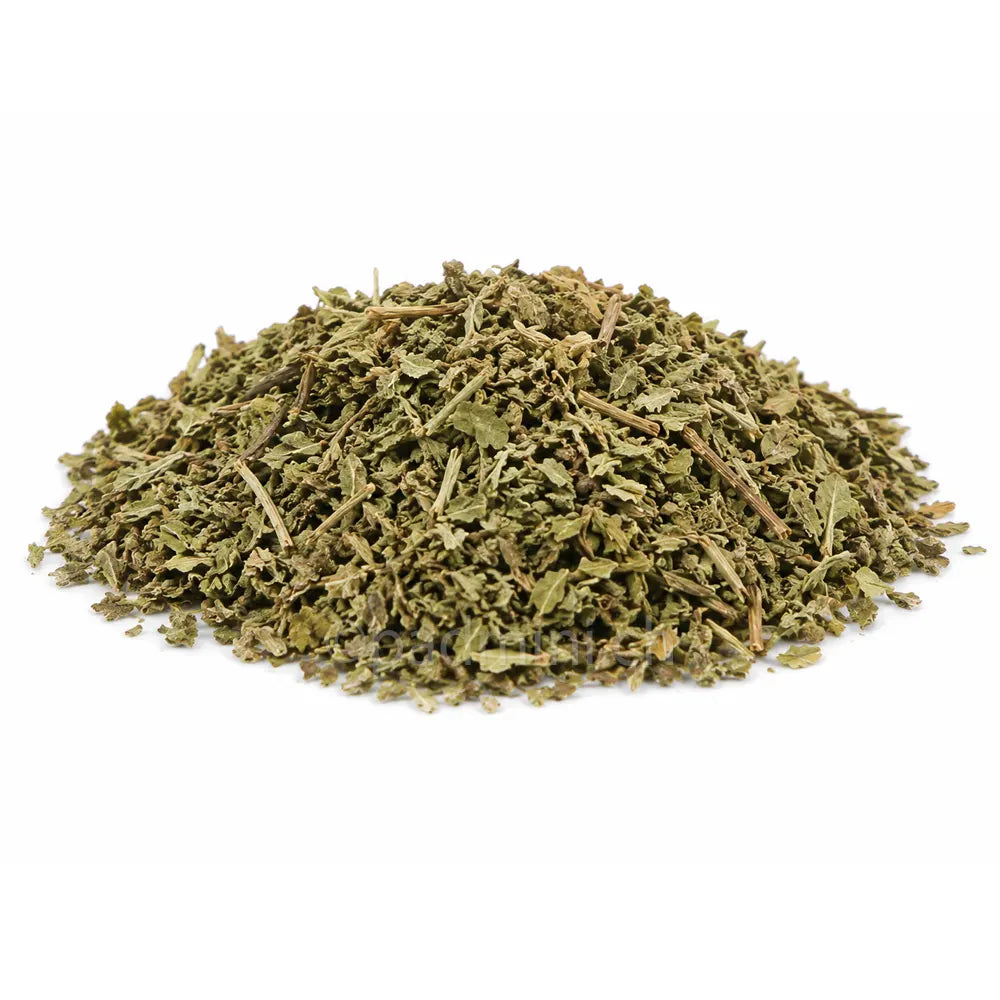
Damiana Leaves 40 g – Turnera diffusa from Mexico for Incense Burning
Damiana Leaves 40 g – Turnera diffusa from Mexico for Incense Burning
1398
Couldn't load pickup availability
Product description
Damiana leaves (Turnera diffusa) come from an aromatic plant native to Mexico, with a long history in traditional herbal practices. When burned as incense, the dried leaves release a predominantly herbal and green fragrance with a gently sweet note. In contemporary incense practices, damiana is particularly associated with love, sensuality and emotional openness.
Turnera diffusa belongs to the Passifloraceae family and grows as a small shrub in tropical regions with a pronounced dry season. The species is not native exclusively to Mexico: its natural distribution extends from southern Texas through parts of Central America and the Caribbean to regions of eastern Brazil. The damiana leaves offered here come from Mexico.
Damiana in traditional Mexican herbal practices
Damiana has an established place in traditional Mexican herbal practices. It became particularly well known as a tonic and for its historical reputation as an aphrodisiac. The plant is also part of regional culture in rural communities of Baja California Sur, where it is used, among other things, to prepare traditional beverages.
The close association between this reputation and the plant is also reflected in its botanical history: the name Turnera aphrodisiaca, published in 1876 and now regarded as a synonym of Turnera diffusa, refers directly to this reputation. These traditional uses are mentioned here solely as historical and cultural background and do not imply any corresponding effect from burning damiana as incense.
The fragrance of damiana leaves when burned as incense
When burned as incense, damiana develops a herbal fragrance with pronounced green notes and a slight, natural sweetness. Occasionally, a nuance reminiscent of figs may also be perceived. This association is simply an olfactory description and does not mean that the plant has a distinctly fruity fragrance or has been treated with other fragrance materials.
The dried leaves can be used in small quantities on suitable incense charcoal, either on their own or together with other plants and incense resins. A heat-resistant incense vessel and good ventilation are recommended; the smoke should not be inhaled directly.
Love and sensuality in contemporary incense practices
In various contemporary incense and esoteric practices, damiana is primarily associated with love, sensuality and emotional openness. Burning damiana as incense can symbolically accompany an intention of growing closer, connection and intimacy between two people.
Other contemporary associations link the plant with symbolically releasing inner inhibitions that stand in the way of closeness and desire, as well as with joy and a zest for life. In some esoteric systems, damiana also appears in incense rituals associated with Venus or Pan. These correspondences belong to modern spiritual beliefs and should not be equated with historically documented cults of antiquity.
Damiana's traditional reputation as an aphrodisiac is considerably older than these contemporary incense practices. However, this does not establish that the plant was already used as love incense in earlier cultures. In particular, the available sources do not reliably confirm any corresponding incense tradition among the Maya or Aztecs.
- Botanical name: Turnera diffusa Willd. ex Schult.
- Family: Passifloraceae
- Plant part used: leaves
- Origin: Mexico
- Fragrance when burned: herbal, green and slightly sweet
- Use: for incense burning, on their own or in incense blends
- Net weight: 40 g