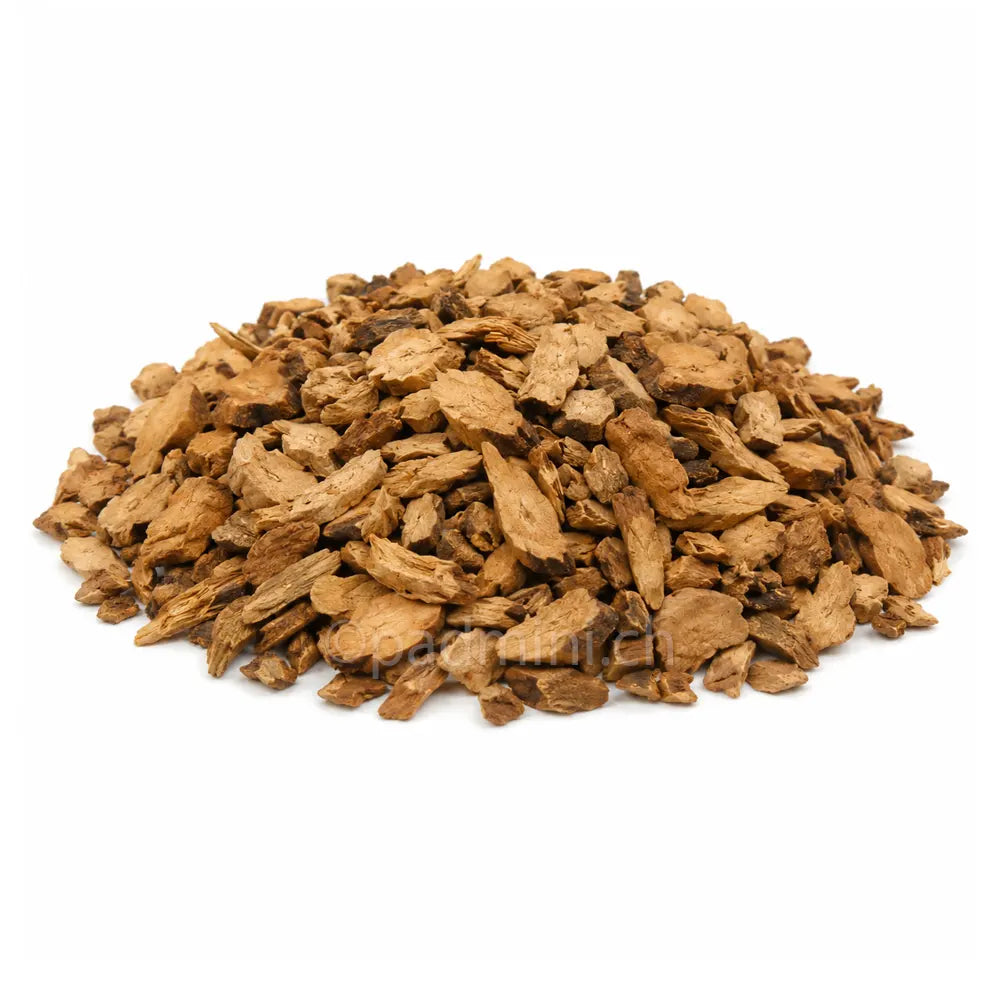
Cut Galangal Root 50 g – Alpinia officinarum for Incense Burning
Cut Galangal Root 50 g – Alpinia officinarum for Incense Burning
1423
Couldn't load pickup availability
Product description
Cut galangal root (Alpinia officinarum) has a warm, spicy and aromatic fragrance with woody and slightly pungent nuances. Its fragrance character is reminiscent of ginger, while retaining its own distinctive, somewhat warmer and spicier personality. Today, galangal is particularly used in incense blends symbolically associated with protection, setting boundaries and inner strength.
Alpinia officinarum, also known as lesser galangal or true galangal, belongs to the Zingiberaceae family, like ginger. What is commonly sold as galangal root is, botanically speaking, the aromatic rhizome, an underground stem. The species is native to southeastern China and Vietnam and has a long history in Asia as a spice and aromatic plant.
Galangal – a spice with a long history
Galangal has long been used in Asia as a spice and in traditional herbal preparations. During the Middle Ages, it also reached Europe through the spice trade, where it was known as an exotic and valuable spice.
A well-known historical connection is with Hildegard of Bingen, in whose writings galangal occupies a special place among plants and spices. However, this historical use concerns galangal as a botanical material and does not establish a documented medieval tradition of burning the rhizome as incense.
Warm, spicy and reminiscent of ginger
When burned as incense, galangal develops a warm, spicy and woody fragrance. Its aromatic pungency is reminiscent of ginger and is accompanied by a slightly fresh nuance. Its fragrance therefore differs noticeably from sweet incense woods or balsamic resins, bringing a dry, lively spiciness to incense blends.
The cut rhizome can be used on its own or together with other incense materials. Particularly in blends, its spicy note can provide an interesting contrast to softer woods and resins. An incense burner with a mesh screen is suitable for a slower release of fragrance; when using suitable incense charcoal, galangal should be added sparingly.
Protection, boundaries and banishing
In contemporary magical and spiritual incense practices, galangal is particularly associated with protection and setting boundaries. It is used in incense rituals whose intention is to symbolically protect people or spaces from unwanted influences.
In addition, galangal is associated in some traditions and contemporary esoteric practices with banishing and breaking curses or harmful magic. Its powerful, spicy character reflects the symbolism of a plant intended not only to purify but also to symbolically resist and ward off unwanted influences.
Galangal is also used in some ritual practices for the consecration of spaces or objects. These applications should be understood as magical and spiritual traditions; they do not imply any actual effect against negative energies, curses or other supernatural influences.
Strength, courage and determination
Alongside its protective symbolism, galangal is associated with inner strength, courage and determination. Burning galangal as incense can therefore symbolically accompany situations in which assertiveness, a clear decision or a conscious new beginning is the focus.
Another modern association concerns love, sensuality and vitality. Galangal's warm and spicy character makes it an interesting component for corresponding incense blends. Here too, these are symbolic or spiritual associations rather than proven physical effects.
Not all galangal comes from the same plant
The galangal offered here is Alpinia officinarum, known as true or lesser galangal. It should not be confused with Alpinia galanga, or greater galangal, or with Kaempferia galanga. These related or similarly named plants have their own botanical and aromatic characteristics.
This distinction is also important when considering information about traditional and magical uses. Not every tradition described under the general name “galangal” can automatically be attributed to Alpinia officinarum.
- Botanical name: Alpinia officinarum Hance
- Family: Zingiberaceae
- Other names: true galangal, lesser galangal
- Plant part used: rhizome, commonly sold as galangal root
- Origin of the current product: China
- Form: cut
- Fragrance when burned: warm, spicy, woody, slightly pungent and ginger-like with a fresh nuance
- Use: for incense burning, on its own or in incense blends
- Net weight: 50 g