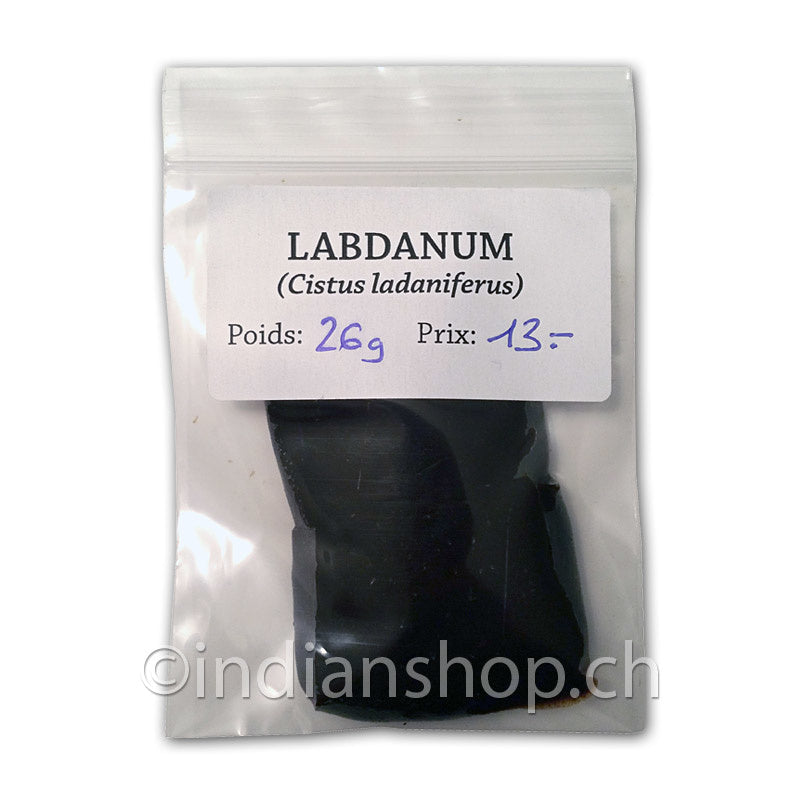
Labdanum Resin from Greece – Cistus creticus
Labdanum Resin from Greece – Cistus creticus
1466-19.5
Couldn't load pickup availability
Product description
Labdanum Resin from Greece – Cistus creticus
Labdanum is an exceptionally aromatic, dark and sticky plant substance produced by various rockrose species of the Mediterranean region. This Greek labdanum comes from Cistus creticus. The plant secretes an intensely fragrant, sticky substance on its leaves and branches, which is collected and has been used since antiquity as an incense and fragrance material.
Unlike the dry grains of frankincense, myrrh or benzoin, labdanum remains soft and highly sticky. Its dark, almost black colour and compact consistency are therefore characteristic features of this natural product and are not a sign of inferior quality.
Fragrance Profile
Labdanum has a warm, deep and intensely balsamic-resinous fragrance with pronounced amber, leather and woody notes. These are accompanied by lightly sweet, honey-like and subtly animalic facets. Its complex and long-lasting aroma clearly distinguishes labdanum from the lighter, fresher fragrance profiles of many frankincense varieties.
A Mediterranean Incense Tradition with a Long History
Labdanum is one of the ancient aromatic raw materials of the Mediterranean region. The Greek historian Herodotus already described an unusual method of harvesting it: the sticky substance adhered to the coats and beards of goats as they moved through rockrose bushes and was subsequently removed from the animals.
On Crete, a more deliberate traditional harvesting method later developed. Using a so-called Ladanisterion, a tool fitted with leather straps, the rockrose shrubs were brushed so that the sticky labdanum adhered to the straps and could then be collected. This distinctive harvesting method forms part of the long history of Cretan labdanum.
Traditional Use as Incense
Labdanum has been used as an aromatic incense material since antiquity. In various incense traditions, its warm, heavy fragrance is associated with grounding, protection and a calm, sheltered atmosphere. Because of its deep fragrance character, it is also used in incense rituals intended to accompany contemplation and inner reflection. These meanings are based on traditional and spiritual beliefs.
The resin can be used on its own, but is also suitable for blends with frankincense, myrrh or benzoin. Even small amounts give an incense blend warm, balsamic depth and a pronounced amber character.
Labdanum in Perfumery
Labdanum is also an important natural fragrance material in perfumery. Its warm, resinous, leathery and animalic facets play a significant role in amber accords and classic chypre compositions. Labdanum therefore connects a very old Mediterranean fragrance tradition with modern perfumery.
How to Use and Practical Tip
For incense burning, a small amount on glowing incense charcoal is sufficient. Since labdanum can be very soft and sticky at room temperature, it is not always easy to portion.
Practical tip: Flatten the labdanum inside a bag and place it in the freezer before use. When cold, the mass temporarily becomes firmer, making it easier to break off small pieces without it sticking heavily to the fingers. This method is also helpful with other soft and sticky incense materials such as elemi or galbanum.
Product Information
- Product: Natural labdanum resin
- Botanical name: Cistus creticus
- Origin: Greece
- Form: dark, soft and highly sticky mass
- Contents: various weights depending on availability
- Price: CHF 0.50 per gram