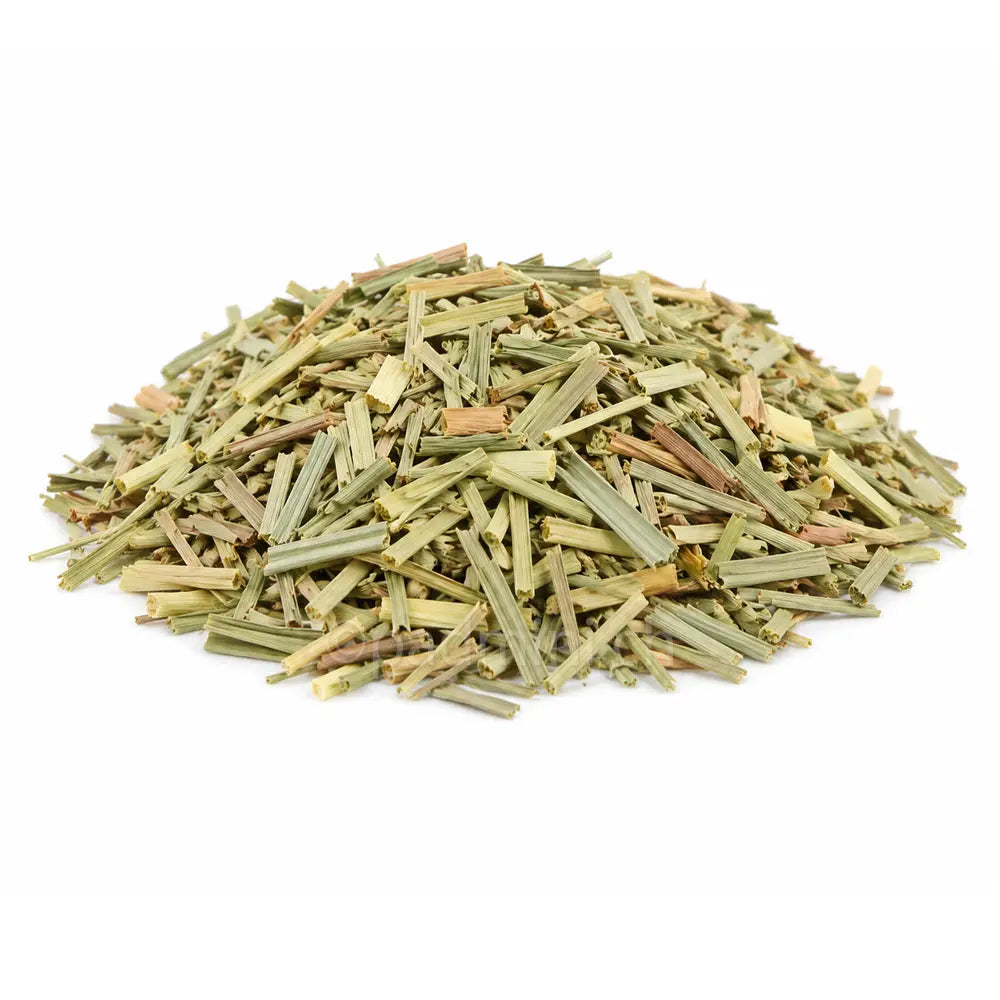
Cut Lemongrass 50 g – Cymbopogon citratus for Incense Burning
Cut Lemongrass 50 g – Cymbopogon citratus for Incense Burning
0864
Couldn't load pickup availability
Product description
Cut lemongrass (Cymbopogon citratus) brings a fresh, distinctly lemony yet green, herbal fragrance to incense burning and incense blends. Its aromatic character differs from that of dried lemon peel: here, the citrus note combines with the fragrance of a tropical grass. In contemporary incense practices, lemongrass is particularly associated with symbolic purification, protection, clarity and new beginnings.
Cymbopogon citratus belongs to the Poaceae family and is a perennial tropical grass. Its native range lies in southern India and Sri Lanka. Today, lemongrass is cultivated in numerous tropical regions and is particularly well known in South and Southeast Asian cuisine. Its aromatic compounds are also used in perfumery.
Lemongrass is not the same as citronella
Different plants are sometimes grouped together in trade under names such as lemongrass or citronella. The lemongrass offered here is Cymbopogon citratus. It should not be confused with Cymbopogon nardus or Cymbopogon winterianus, which are among the plants used to produce citronella oil.
Nor is it lemon balm or lemon verbena. Although these plants also have a pronounced citrus character, they belong to entirely different botanical families.
Fresh, lemony and green
When gently heated, lemongrass releases a fresh, lemony and herbal fragrance with green and slightly sweet nuances. Unlike lemon peel, its fragrance does not immediately evoke the zest of a citrus fruit, but rather an aromatic grass with a pronounced lemon character.
The intensity and subtlety of the fragrance depend on drying, storage and temperature. An incense burner with a mesh screen is particularly suitable for heating lemongrass slowly and allowing its fresh character to emerge. When using suitable incense charcoal, it should be added sparingly, as excessive heat can quickly overwhelm the delicate citrus notes with a more general smell of burnt plant material.
A fresh ingredient for incense blends
Lemongrass can be burned as incense on its own, but is particularly well suited as a fresh, botanical ingredient in incense blends. Its lively citrus note provides an interesting contrast to earthy roots, spicy herbs, aromatic woods and natural resins.
Compared directly with lemon peel, lemongrass has a more distinctly green and herbal character, whereas the fruit peel has a more pronounced zest-like fragrance. The two can therefore bring different accents to an incense blend.
Purification, protection and renewal
In some contemporary spiritual and folk-magical practices, lemongrass is associated with symbolic purification and protection. Burning the plant as incense may accompany rituals intended to leave behind an atmosphere perceived as burdensome or to symbolically establish boundaries against unwanted influences.
Renewal and new beginnings are also among its widespread associations. The fresh, lively fragrance of lemongrass complements the idea of leaving the past behind and consciously beginning a new chapter.
In certain folk-magical traditions, including branches of Hoodoo, lemongrass also carries protective symbolism and is associated with removing negative influences. Other associations include good fortune and, in some cases, love. These traditions encompass different ritual uses of the plant and should not all be interpreted as historical incense-burning practices.
Clarity and a fresh sense of direction
The concepts of clarity, freshness and lightness describe another symbolic aspect of lemongrass. Its bright citrus fragrance is suitable for incense rituals intended to accompany a moment of reorientation, a personal transition or the conscious creation of a fresh atmosphere.
These meanings should be understood as ritual and spiritual associations. Lemongrass has not been shown to remove so-called negative energies, and its smoke has no proven effect on concentration or mood.
- Botanical name: Cymbopogon citratus (DC.) Stapf
- Family: Poaceae (grass family)
- Alternative name: lemon grass
- Plant part used: dried above-ground plant parts
- Origin of the current product: Egypt
- Form: cut
- Fragrance when burned: fresh, lemony, herbal and green with slightly sweet nuances
- Use: for incense burning, on its own or in incense blends
- Net weight: 50 g