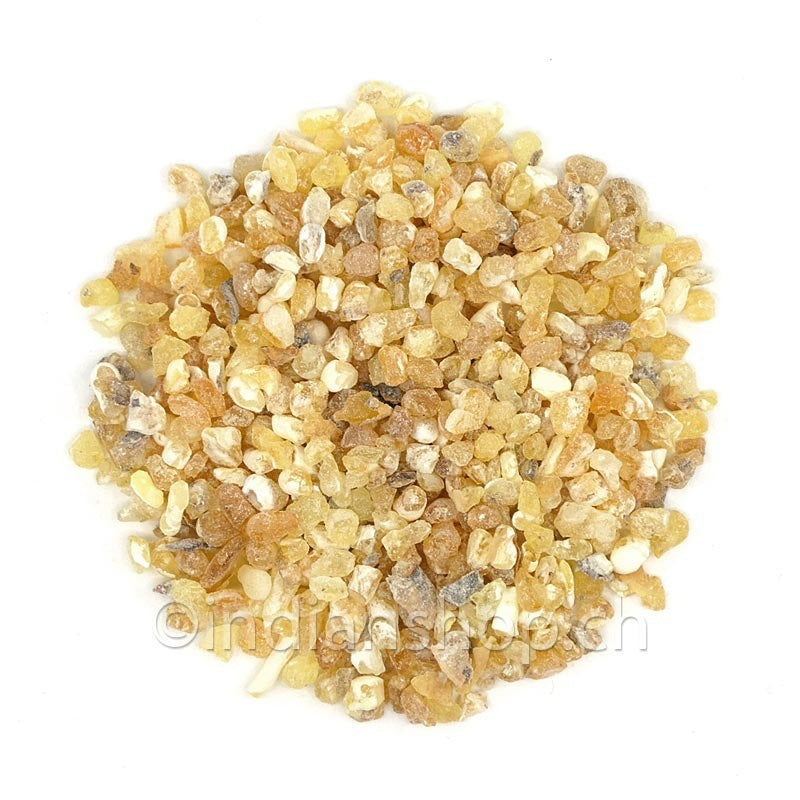
Maidi Frankincense from Somalia – Boswellia frereana 30 g
Maidi Frankincense from Somalia – Boswellia frereana 30 g
1682
Couldn't load pickup availability
Product description
Maidi Frankincense from Somalia, also known as Maydi or Meydi, is the natural resin of the frankincense tree Boswellia frereana. This distinctive frankincense species comes from the rocky landscapes of northern and northeastern Somalia and differs in both appearance and fragrance from the better-known frankincense varieties obtained from Boswellia carterii or Boswellia sacra.
The golden-yellow to amber-coloured resin pieces have some translucent areas and whitish, matt surfaces. Depending on the grade, they appear as larger, sometimes flattened pieces or smaller, irregular fragments. When heated, Maidi releases a complex fragrance with balsamic, fruity and slightly lemony notes.
Boswellia frereana – a distinctive frankincense species
Maidi frankincense comes from Boswellia frereana, a distinct species belonging to the Burseraceae family. These trees grow in dry, rocky areas of Somalia and produce a resin whose characteristics differ from those of other frankincense species.
According to the specialist importer, the resin contains comparatively little gum and has a pronounced oleoresinous character. As a result, it can form elongated resin flows on the tree, which are harvested once they have hardened. The solidified resin is relatively brittle and may break into smaller pieces during sorting, transport or packaging.
Particularly large, elongated and golden-coloured resin pieces are highly valued in the trade. The smaller grades consist partly of fragments from the same resin formations. All these grades are Boswellia frereana, rather than different botanical species.
The different Maidi grades
Maidi is traditionally sorted according to the size and appearance of the resin pieces. Our range includes five commercial grades, which can be selected directly from the product options:
- Maidi Mushaad: the first commercial grade, also known as Mushat. It is characterised by particularly large resin pieces, often elongated and flattened.
- Maidi Mujaarwal: the second grade, also known as Mujarwal, consisting of smaller resin pieces than the first grade.
- Maidi Fas Kabir: the third grade, with resin pieces divided into smaller sizes.
- Maidi Fas Saqir: the fourth grade, also written Fas Sakir, consisting of smaller fragments.
- Maidi Fas Shotar: another commercially available grade of Maidi frankincense.
These names refer to commercial grades rather than different plant species. The differences mainly concern the size and presentation of the resin. They do not, in themselves, indicate a fundamentally different fragrance or composition.
Fragrance profile – balsamic, fruity and spicy
Maidi has a distinctive, multifaceted aroma. When gently heated, it initially releases a soft, balsamic frankincense fragrance, accompanied by delicate fruity and lemony nuances.
As the fragrance develops, hints of pine, subtle peppery spiciness and slightly musky notes may become apparent. These impressions are part of the resin's natural fragrance profile and do not mean that corresponding fragrance ingredients have been added.
Compared with the often fresh, lemony frankincense varieties obtained from Boswellia carterii, Maidi offers a different aromatic experience. The combination of its fruity, balsamic and spicy facets is particularly interesting.
History and traditional uses
Somalia is one of the major sources of natural frankincense. For centuries, resins from various Boswellia species have been collected and distributed through regional and international trade routes. Maidi holds a special place within this tradition and is valued for its characteristic resin formations and fragrance.
Maidi is sometimes referred to as the “King of Frankincense”. This nickname expresses the particular esteem in which the golden-coloured resin is held, but it does not represent an official quality classification.
Another distinctive feature of Boswellia frereana is its traditional use as chewing gum in parts of its region of origin. This cultural use must be distinguished from the incense product offered here: our Maidi frankincense is intended exclusively for incense burning and is not sold as a food product.
Like other types of frankincense, Maidi is also appreciated during quiet moments, for meditation or as an accompaniment to personal incense rituals. In various incense traditions, frankincense symbolises purification, contemplation and spiritual reflection.
How to burn Maidi frankincense
Maidi melts relatively easily when heated. An incense burner with a suitable collecting dish or incense plate is therefore particularly recommended, allowing the melting resin to be heated in a controlled manner.
- Gentle heating: Place a small amount of resin on the incense plate and heat it slowly. This allows the delicate fruity and balsamic fragrance notes to develop.
- Burning on charcoal: A fully glowing incense charcoal tablet can also be used. Begin by placing only a small amount of resin on the charcoal, as higher temperatures can produce more substantial smoke.
- Dosage: Begin with a few small pieces and add more as required. Larger resin pieces can be carefully broken into smaller fragments.
As Maidi melts when heated, the incense vessel used should be suitable for resins that become liquid. The temperature influences both the development of the fragrance and the amount of smoke produced.
Product characteristics
- Product: Maidi Frankincense, also known as Maydi or Meydi
- Botanical name: Boswellia frereana Birdw.
- Plant family: Burseraceae (frankincense and myrrh family)
- Country of origin: Somalia
- Material: natural frankincense resin
- Colour: golden-yellow to amber, sometimes with whitish, matt surfaces
- Fragrance character: balsamic, fruity, slightly lemony, with pine-like, peppery and musky nuances
- Available grades: Mushaad, Mujaarwal, Fas Kabir, Fas Saqir and Fas Shotar
- Net contents: 30 g per pack
- Use: for burning on a suitable incense burner or on incense charcoal
For incense burning only, not suitable for consumption. Always place incense vessels on a heat-resistant surface and never leave them unattended. Avoid directly inhaling the smoke and ensure adequate ventilation. Keep away from children and pets.