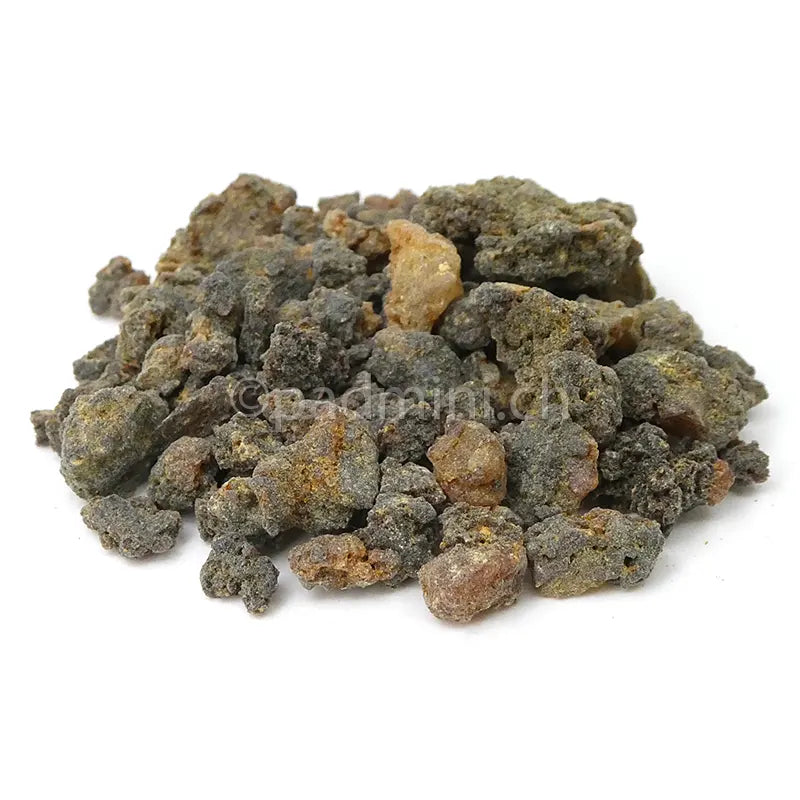
Opopanax Hagar from Somalia 40 g – Natural Incense Resin
Opopanax Hagar from Somalia 40 g – Natural Incense Resin
2082
Couldn't load pickup availability
Product description
Opopanax Hagar from Somalia, also known as opoponax, is a natural incense resin from the Horn of Africa. It is traded under the botanical name Commiphora erythraea, which is now considered a synonym of Commiphora kataf. The resin belongs to the same plant family as true myrrh and is characterised by a warm, balsamic and pleasantly spicy fragrance.
This carefully sorted quality contains very few wood and bark residues. The mixture of resin pieces of varying sizes and smaller grains displays predominantly greyish-brown, earthy tones, with occasional yellowish and amber-coloured areas.
Opopanax Hagar – a relative of myrrh
The genus Commiphora comprises numerous trees and shrubs found mainly in the dry regions of Africa and the Arabian Peninsula. Many of these plants produce aromatic resins that have long been collected and used for various purposes.
Opopanax Hagar comes from Somalia and is attributed to the species Commiphora kataf, also known by the botanical synonym Commiphora erythraea. Like true myrrh (Commiphora myrrha), this species belongs to the Burseraceae family, which also includes the frankincense trees of the genus Boswellia.
Opopanax is sometimes referred to as sweet myrrh. However, this trade name does not refer exclusively to a single plant species. Resins from other Commiphora species, particularly Commiphora guidottii, are also sold under similar names. The Hagar designation should therefore not be equated with other varieties of opopanax.
Fragrance profile – warm, balsamic and soft
Opopanax is particularly valued for its warm, balsamic and resinous fragrance when burned as incense. Compared with true myrrh, its fragrance character is often described as softer, sweeter and less bitter.
Depending on its origin and the quality of the resin, earthy, woody and slightly spicy nuances may mingle with a subtle sweetness. This description reflects the general fragrance character of opopanax; its precise expression may vary from one harvest to another.
Gentle heating allows the balsamic fragrance notes to be appreciated more clearly. Excessive heat, on the other hand, can produce considerable smoke and bring out harsher, burnt odours.
Opopanax in the history of incense resins
The aromatic resins of the genus Commiphora are among the traditional natural substances of the Horn of Africa and the Arabian Peninsula. Various types of myrrh and related resins were traded along extensive routes as early as antiquity and used in fragrant preparations and religious ceremonies.
Aromatic resins have also been known under the name opopanax for a long time. In the ancient Mediterranean world, various fragrant plant substances were valued for incense burning in temples and other ceremonial settings. However, as historical names do not always correspond clearly to a modern botanical species, these traditions cannot be attributed exclusively to the Somali Hagar variety.
In some contemporary incense traditions, opopanax is symbolically associated with purification, reflection and grounding. Such associations belong to the cultural and spiritual use of incense materials and should not be understood as proven effects.
How to burn Opopanax Hagar
The resin pieces of varying sizes are easy to measure out in small quantities. When burning on charcoal, begin with a small piece or a modest amount of the finer grains. More resin can be added gradually as required.
For a slower and gentler release of fragrance, an incense burner with an adjustable heat source is suitable. A moderate temperature helps bring out the warm, balsamic fragrance notes and reduces the risk of the resin burning too quickly.
Opopanax Hagar can be burned on its own or combined with other natural resins. Its combination with frankincense is particularly interesting, as the often fresher and clearer resinous notes of frankincense provide a pleasant contrast to the warm, balsamic character of opopanax. Its fragrance can also be incorporated into blends with myrrh or aromatic woods.
Product characteristics
- Product: Opopanax Hagar, also known as Opoponax
- Botanical name: Commiphora erythraea (synonym of Commiphora kataf)
- Plant family: Burseraceae
- Origin: Somalia
- Material: natural tree resin
- Quality: carefully sorted, with very few wood and bark residues
- Form: irregular resin pieces and grains of varying sizes
- Appearance: greyish-brown to amber-coloured, sometimes with yellowish areas
- Fragrance character: warm, balsamic, resinous, slightly spicy and earthy
- Net contents: 40 g
- Use: for burning on charcoal or on a suitable incense burner
For incense burning only. Place the incense vessel on a stable, heat-resistant surface and never leave it unattended. Use the resin sparingly, avoid directly inhaling the smoke and ventilate the room thoroughly after burning the incense. Keep children and pets away from the heat source.