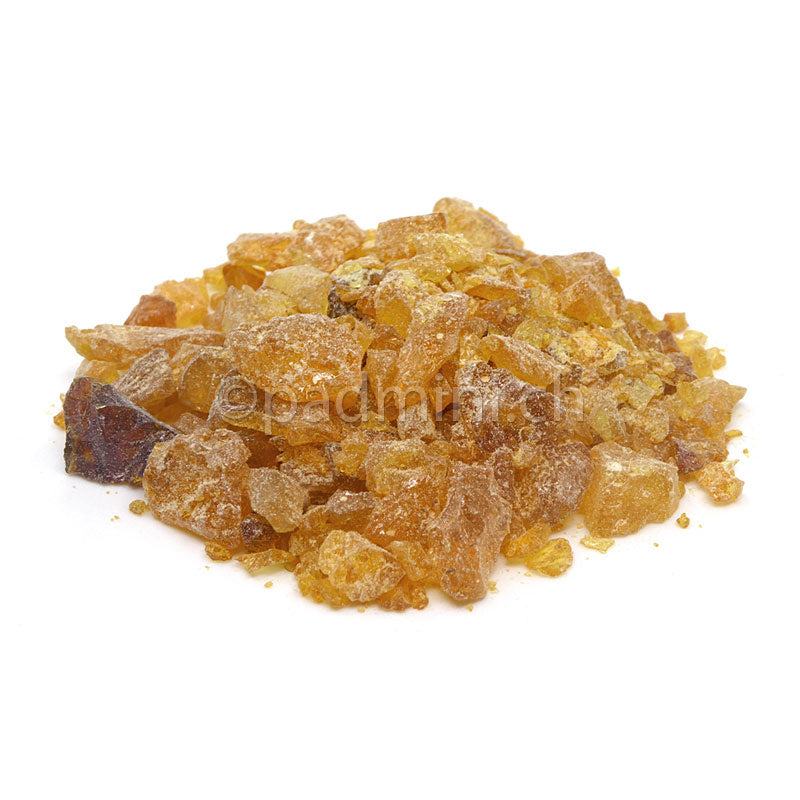
Spruce Resin 40 g – Natural Incense Resin from Picea abies
Spruce Resin 40 g – Natural Incense Resin from Picea abies
0350
Couldn't load pickup availability
Product description
Spruce resin is the natural resin of the Norway spruce (Picea abies), one of Europe's best-known coniferous trees. When burned as incense, it releases a fresh, intensely resinous and woody fragrance reminiscent of a walk through a coniferous forest. The warm, golden-yellow to amber-coloured resin pieces are suitable for burning on their own or for creating your own incense blends.
Spruce resin – the aromatic resin of the Norway spruce
The Norway spruce (Picea abies) belongs to the pine family (Pinaceae) and is widespread throughout much of Europe. It produces resin that exudes when the bark is damaged and contributes to the tree's natural protection. On exposure to air, the resin gradually hardens and may develop various shades of yellow, gold and brown.
Although the terms are sometimes confused in everyday language, spruce resin is botanically distinct from fir resin and pine resin. Spruces belong to the genus Picea, firs to Abies and pines to Pinus. Their resins have related but not identical fragrance characteristics.
Fragrance profile – fresh, resinous and forest-like
When gently heated, spruce resin releases a distinctive coniferous forest fragrance. Fresh, green and slightly citrusy nuances mingle with warm, woody and balsamic resinous notes. The scent is reminiscent of spruce branches, tree bark and the characteristic aroma of a coniferous forest.
At higher temperatures, smoke production becomes more intense and the fragrance may increasingly take on smoky or burnt notes. Gentle heating is therefore recommended to appreciate the finer woodland nuances.
Spruce resin in European incense traditions
Resins from coniferous trees have long been used in Europe for various practical purposes, including sealing and as ingredients in traditional resin preparations. Conifer resins are also used as aromatic incense materials.
In contemporary incense practices, spruce resin is particularly appreciated for its natural woodland fragrance. Some people symbolically associate this scent with a connection to nature, grounding and ritual purification. Such associations reflect personal or spiritual beliefs rather than proven effects of the resin.
Its distinctive aroma makes spruce resin particularly appealing to anyone wishing to experience the fragrance of European forests through incense burning.
How to burn spruce resin
Spruce resin melts when heated and can quickly produce considerable smoke when exposed to direct heat. It is therefore advisable to begin with just a small piece of resin.
On incense charcoal: Place a small piece on fully glowing incense charcoal. A thin layer of incense ash can help reduce the direct heat slightly and allow a more even release of fragrance. At excessively high temperatures, the resin may burn quickly and produce a pronounced burnt smell.
On an incense burner: For a gentler release of fragrance, an adjustable incense burner or a burner suitable for resins is recommended. As the resin becomes liquid when heated, a suitable collecting dish should be placed on the incense mesh to prevent it from dripping into the heat source.
Spruce resin can be burned on its own or combined with other natural incense materials. In blends with frankincense or aromatic woods, it introduces a fresh, forest-like element that complements warmer, balsamic fragrance notes.
Product characteristics
- Product: Spruce Resin
- Botanical name: Picea abies
- Plant family: Pinaceae
- Plant part used: tree resin
- Appearance: irregular, golden-yellow to amber-coloured resin pieces
- Fragrance character: fresh, resinous, woody, forest-like and slightly citrusy
- Net contents: 40 g
- Use: for burning on charcoal or with a suitable gentle heat source
For incense burning only. Place the incense vessel on a stable, heat-resistant surface and never leave it unattended. Use the resin sparingly in well-ventilated rooms, avoid directly inhaling the smoke and keep children and pets away from the heat source.