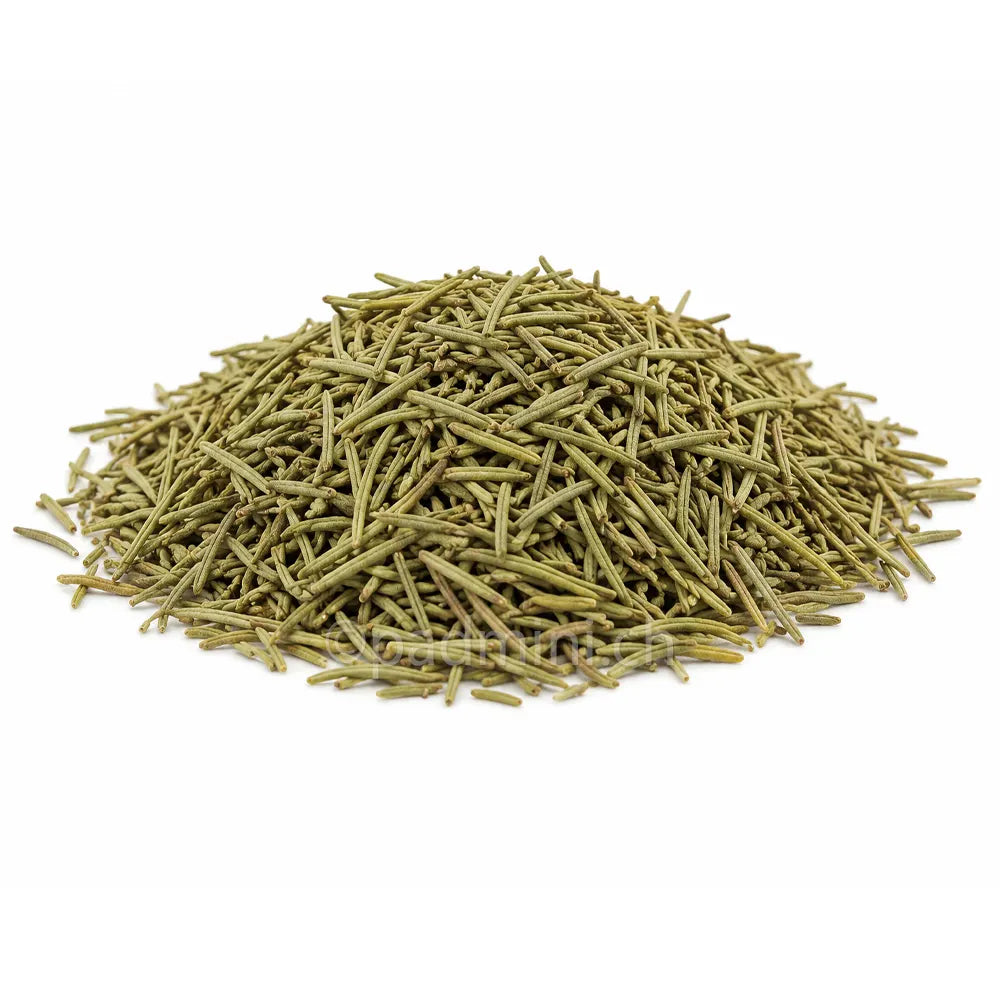
Rosemary Leaves 50 g – Rosmarinus officinalis for Incense Burning
Rosemary Leaves 50 g – Rosmarinus officinalis for Incense Burning
1473
Couldn't load pickup availability
Product description
Dried rosemary leaves (Rosmarinus officinalis) are a classic aromatic plant material from the Mediterranean region. When burned as incense, rosemary releases a powerful, fresh and spicy-herbal fragrance with resinous and slightly camphor-like nuances. In European traditions, the plant has strong symbolic associations with protection and remembrance; in contemporary incense practices, it is also associated with symbolic purification and renewal.
Rosemary belongs to the Lamiaceae (mint) family and grows as an evergreen aromatic shrub in the Mediterranean region. The traditional botanical name Rosmarinus officinalis remains widely used today, although the species is now botanically classified as Salvia rosmarinus. Its narrow leaves resemble needles in appearance, but rosemary is not a conifer.
A Mediterranean plant with a long history
Rosemary has been part of everyday life in the Mediterranean region and Europe for centuries, serving as a culinary herb, fragrant plant and traditional herbal material. In medieval Europe, it was also believed to offer protection against physical and spiritual dangers. Such beliefs contributed to rosemary's strong protective symbolism.
Rosemary is equally closely associated with remembrance and fidelity. Sprigs were carried, given as gifts or laid down during weddings and funerals in various European customs. These traditions did not necessarily involve burning the plant, but they form an important part of its cultural symbolism.
Fresh, spicy and Mediterranean
When burned as incense, rosemary leaves develop a powerful, aromatic and herbal fragrance with fresh, spicy and resinous notes. Slightly camphor-like nuances provide additional freshness, while the green, Mediterranean character may occasionally be somewhat reminiscent of pine in the background.
The fragrance is distinctive and more fresh and spicy than sweet or floral. Burning particularly brings out its spicy and resinous character, which means that even a small quantity can give an incense blend a pronounced aromatic presence.
The dried leaves can be burned on their own or together with other plants and natural resins. In terms of fragrance, rosemary can be combined with juniper, bay laurel, lavender, sage or frankincense, for example. A heat-resistant incense vessel and good ventilation are recommended; the smoke should not be inhaled directly.
Protection and warding off negative influences
In European folk traditions, rosemary was regarded as a protective plant. It was believed to safeguard homes and their inhabitants against harmful or ominous influences. In some beliefs, this protection also extended to evil spirits and other spiritual influences perceived as threatening.
In contemporary incense practices, this older protective symbolism is often combined with symbolic purification. Rosemary accompanies incense rituals intended to free a space from influences perceived as burdensome or negative and to create a protected atmosphere. Contemporary spiritual terminology also refers to the removal of “negative energies” in this context.
The idea of warding off evil or the “Evil One” may also appear in folk-magical and spiritual interpretations of rosemary. However, it should be understood as a belief rather than a historically uniform exorcism practice or a proven effect of the plant.
Remembrance, fidelity and new beginnings
One of rosemary's most characteristic symbolic meanings is remembrance. Its association with commemoration and fidelity is historically much better documented than many modern esoteric attributions. When burned as incense, this symbolism can, for example, accompany the conscious remembrance of people, places or past periods of life.
In contemporary spiritual practices, rosemary is also associated with clarity and renewal. Burning rosemary as incense can therefore accompany a symbolic transition or new beginning. These meanings should be understood as cultural and spiritual associations and do not imply that rosemary smoke improves memory, concentration or mental performance.
Rosemary in traditional herbal practices
Alongside its culinary uses, rosemary has a long history in traditional European herbal practices. Documented uses of its leaves include certain herbal preparations for mild digestive complaints. These traditional applications are mentioned here solely for historical context and cannot be extended to burning the leaves or inhaling their smoke.
- Botanical name: Rosmarinus officinalis L. (now Salvia rosmarinus Spenn.)
- Family: Lamiaceae (mint family)
- Plant part used: leaves
- Origin of the current product: Morocco
- Form: dried rosemary leaves
- Fragrance when burned: fresh, herbal, spicy and resinous with slightly camphor-like nuances
- Use: for incense burning, on their own or in incense blends
- Net weight: 50 g