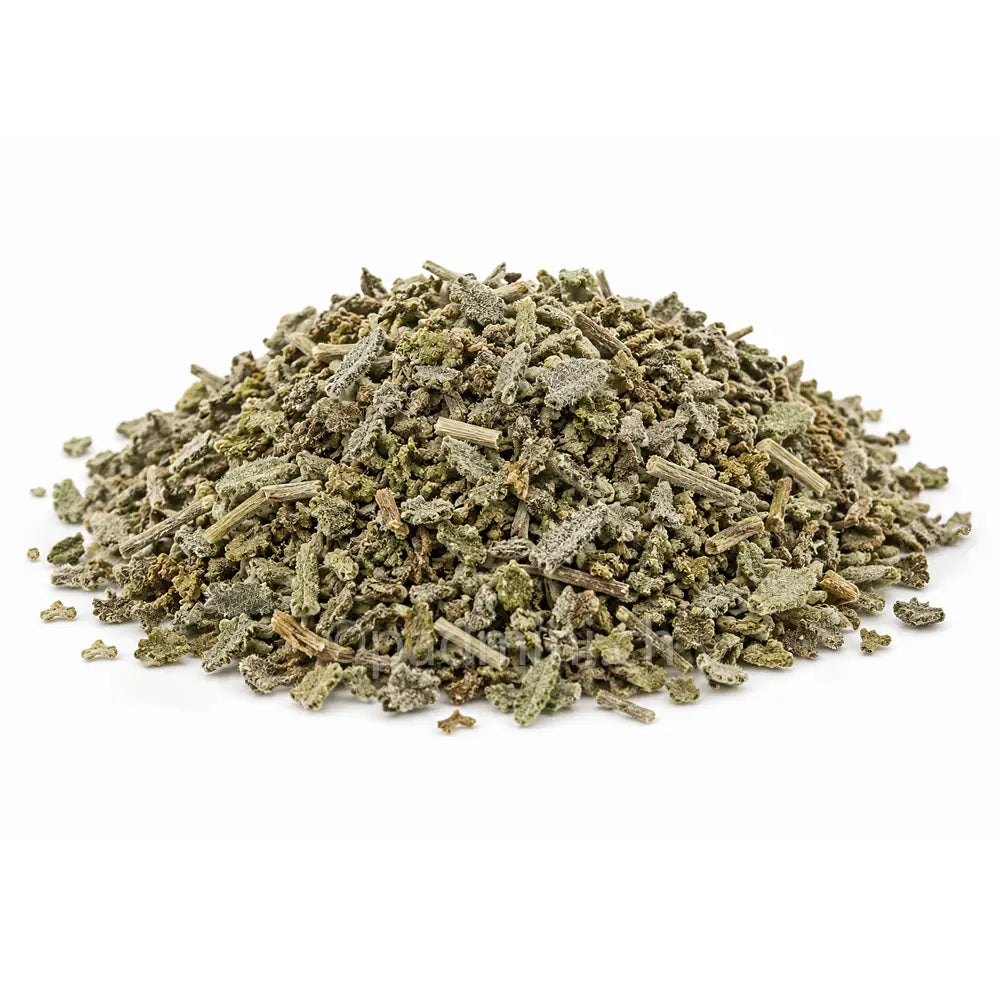
Sage Leaves 50 g – Salvia officinalis from Poland
Sage Leaves 50 g – Salvia officinalis from Poland
0863
Couldn't load pickup availability
Product description
Sage leaves (Salvia officinalis) from Poland, cut and dried for incense burning. Common sage, also known as garden sage or culinary sage, is native to the Mediterranean region and is one of Europe’s most traditional aromatic plants. Its strong fragrance differs noticeably from the softer character of North American white sage (Salvia apiana).
Salvia officinalis belongs to the mint family and can be recognised by its grey-green, aromatic leaves. Although the species is originally native to the Mediterranean region, it has been cultivated across large parts of Europe for centuries. The sage leaves used for this product come from Poland.
An ancient European cultivated plant
Sage has a long history dating back to antiquity. The plant was already known to the Greeks and Romans and was later also cultivated in medieval monastery and herb gardens. The species name “officinalis” reflects its historical importance in European herbal traditions and in the pharmacies of earlier centuries.
Alongside these historical uses, sage also played a role in various folk and ritual traditions. When burned as incense, it was associated, among other things, with purification and protection. Such associations belong to historical and cultural traditions and should not be understood as scientifically proven effects.
Fragrance profile
Dried common sage has an intense, herbal and spicy fragrance with distinctly camphor-like nuances. When burned as incense, dry, warm and slightly woody notes also emerge. Compared with white sage, its aroma is more austere and more strongly characterised by the typical spiciness of European sage.
How to use for incense burning
The cut sage leaves are particularly suitable for burning on charcoal. Place a small amount on fully glowing incense charcoal and add more if needed. As dried leaves smoulder quickly, it is best to use them sparingly.
Sage can be burned on its own or combined with other herbs, aromatic woods and incense resins. Always use a heat-resistant incense vessel, ensure adequate ventilation and never leave glowing incense charcoal unattended.
Product details
- Name: common sage, sage leaves
- Botanical name: Salvia officinalis
- Origin of this product: Poland
- Plant part used: leaves
- Format: dried and cut
- Contents: 50 g
- Use: for incense burning and incense blends
- Fragrance character: intense, herbal, spicy, camphor-like and slightly woody
As this is a natural product, the colour, shape and size of the plant material may vary.