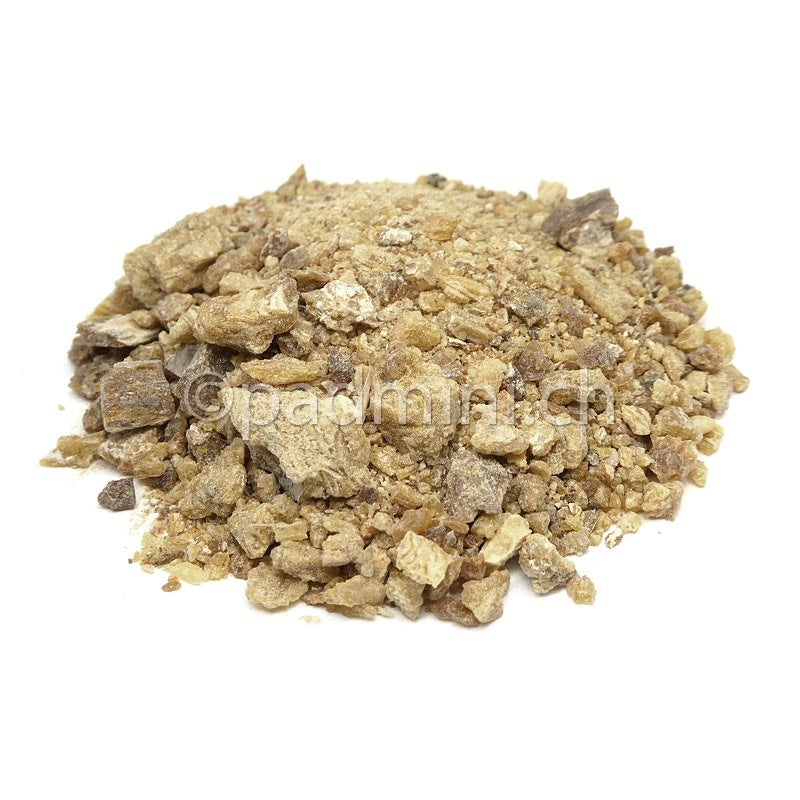
Sal Resin from India 50 g – Shorea robusta
Sal Resin from India 50 g – Shorea robusta
0482M
Couldn't load pickup availability
Product description
Sal resin, also known as sal dammar, is a natural incense resin from the sal or shala tree (Shorea robusta). This majestic tree is native to the Indian subcontinent and has long held cultural and religious significance in South Asia. Its aromatic resin is traditionally burned as incense, including during Hindu ceremonies and in temples.
The resin from India is available in two forms: larger, unprocessed natural pieces or a mixture of coarse powder and small resin fragments. Both varieties have the same characteristic spicy, balsamic fragrance with warm, woody and slightly earthy nuances.
The sal tree – Shorea robusta
The sal tree (Shorea robusta) belongs to the Dipterocarpaceae family and is particularly widespread in India, Nepal and other regions of the northern Indian subcontinent. It forms extensive forests and is one of the most economically and culturally important tree species in the region.
Its resin exudes from damaged areas of the bark and hardens in the air into pale, yellowish to brownish pieces. It is known by various names, including sal resin, sal dammar and ral. However, the term dammar is also used for resins from other tree species and is therefore not botanically specific.
Sal resin in Hindu incense traditions
In India, aromatic resins have long been used in religious ceremonies and as ingredients in traditional incense blends. Sal resin is among the resins used in this context as incense for puja ceremonies and temple rituals.
During Hindu puja, incense materials may be presented as fragrant offerings. The rising smoke accompanies prayers, mantras and other ritual practices. The fragrance symbolically represents reverence, purity and the preparation of a sacred space.
Sal resin is also traded in India under the names Raal and Ral. It can be burned on its own or used as an ingredient in incense blends. The precise composition of such blends varies according to the region, tradition and intended purpose.
These religious uses form part of the resin's cultural background. The concept of spiritual purification should be understood as a symbolic meaning rather than a scientifically proven effect of the smoke.
The sal tree in the religious traditions of South Asia
Not only the resin but also the sal tree itself holds particular cultural significance. In Buddhist traditions, the sal tree is associated with important events in the life of the Buddha. Tradition describes his birth in the Lumbini grove and his Parinirvana between two trees identified as sal trees.
However, the botanical identification of historical and religious tree names is not always clear. In particular, the sal tree is sometimes confused with the ashoka tree, which also has religious significance. These traditions should therefore not be regarded as botanical evidence.
This cultural history illustrates the importance of trees and their natural products in the religious beliefs of South Asia. However, it does not mean that every historical reference to the sal tree is directly connected with the use of its resin as incense.
Fragrance profile – spicy, balsamic and woody
When burned as incense, sal resin releases a spicy, balsamic and distinctly woody fragrance. Warm, resinous and slightly earthy nuances give it a characteristic scent reminiscent of dry woods and forest resins.
Compared with some pale varieties of frankincense, sal resin is less fresh and citrusy. Its fragrance character is generally warmer, drier and spicier. At high temperatures, smoky and more bitter notes may become prominent.
How to burn sal resin
Sal resin is particularly suitable for traditional incense burning on charcoal. However, it can also be carefully warmed on a suitable incense burner.
- On incense charcoal: Light an incense charcoal tablet and allow it to become fully glowing. Then place a small piece of resin or a modest amount of the finer fragments on top. More resin can be added as required.
- On an incense burner: Slowly warm the resin at a moderate temperature. This allows the balsamic and woody fragrance nuances to be appreciated in greater detail. A suitable collecting dish prevents melted resin from dripping into the heat source.
- In incense blends: Sal resin can be combined with frankincense, myrrh, aromatic woods and other natural incense materials. Its warm, spicy fragrance can lend a blend a pronounced woody and balsamic note.
The larger resin pieces are suitable for traditional incense burning and can be broken into smaller fragments if required. The variety consisting of coarse powder and small fragments is particularly easy to measure out and incorporate evenly into your own incense blends.
Traditional symbolism
In various contemporary incense practices, sal resin is associated with symbolic purification, grounding and inner composure. Some spiritual traditions regard its warm, earthy fragrance as an accompaniment to meditation, prayer and rituals marking new beginnings.
Such beliefs belong to religious and spiritual traditions. They should not be understood as proven energetic, psychological or therapeutic effects of the resin.
Product characteristics
- Product: Sal Resin / Sal Dammar
- Botanical name: Shorea robusta
- Plant family: Dipterocarpaceae
- Origin: India
- Material: natural tree resin
- Form: available as larger resin pieces or as a mixture of coarse powder and small fragments
- Fragrance character: spicy, balsamic, woody, warm and slightly earthy
- Net contents: 50 g
- Use: for burning on charcoal, on a suitable incense burner or for creating your own incense blends
For incense burning only. Place the incense vessel on a stable, heat-resistant surface and never leave it unattended. Use the resin sparingly, avoid directly inhaling the smoke and ventilate the room thoroughly after burning the incense. Keep children and pets away from the heat source.