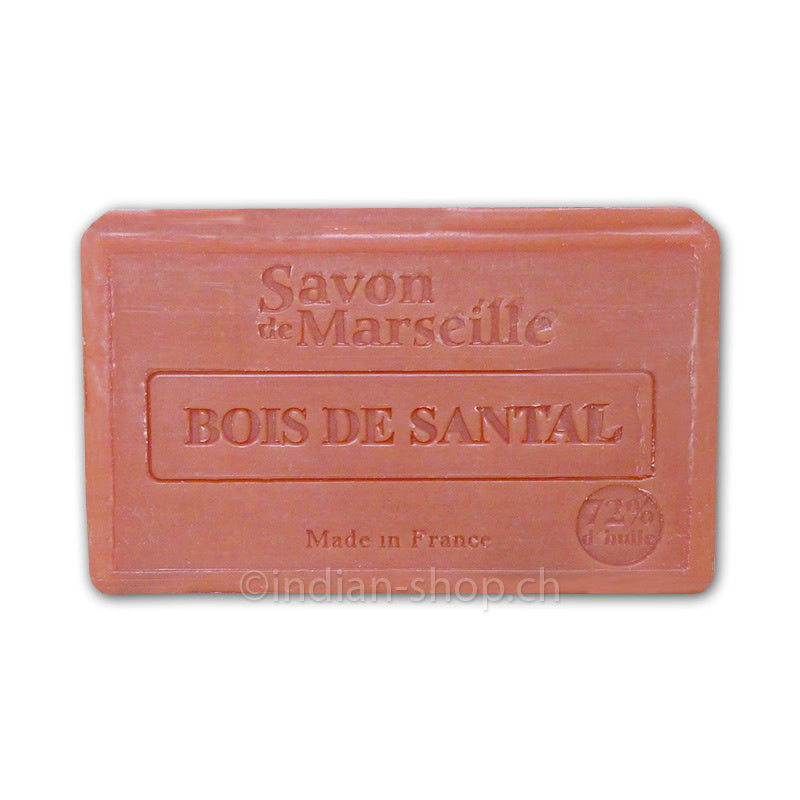
Le Chatelard 1802 Savon de Marseille Sandalwood 100 g
Le Chatelard 1802 Savon de Marseille Sandalwood 100 g
0777
Couldn't load pickup availability
Product description
The Sandalwood (Bois de Santal) scented soap from Le Chatelard 1802 combines the warm, soft fragrance of sandalwood with an extra-mild formula for daily body care. Its woody fragrance composition is characterised by creamy, velvety and slightly powdery nuances that give sandalwood its distinctive character. The soap is made in Provence, contains sweet almond oil and vegetable glycerin, and is suitable for cleansing the hands, body and face.
Sandalwood – a warm, creamy woody fragrance
Sandalwood is one of the best-known and most traditional fragrance ingredients in perfumery. Unlike many dry or resinous woods, it has a particularly soft, rounded and enveloping scent. Its woody warmth is combined with a creamy, slightly milky and subtly powdery note, reminiscent of the velvety surface of finely polished wood.
The Bois de Santal fragrance composition from Le Chatelard 1802 captures this characteristic combination. The manufacturer describes it as an exotic fragrance whose distinctive appeal comes from the gentle warmth and woody depth of sandalwood.
Compared with cedarwood, which often has a drier and more pronounced scent, sandalwood generally feels softer and creamier. It also differs considerably from the fresh, resinous character of pine. Its distinctive quality lies less in pronounced freshness than in the harmonious combination of warmth, woodiness and gentle richness.
The fragrance therefore has a calm, elegant and subtly exotic character. It belongs to the woody fragrance family without necessarily displaying smoky or strongly resinous facets.
Sandalwood and its botanical origins
The term sandalwood encompasses various fragrant tree species, mainly belonging to the genus Santalum in the sandalwood family (Santalaceae). Particularly well known is Indian sandalwood (Santalum album), whose aromatic heartwood has been valued for centuries.
This tree species originally comes from tropical regions of Asia and has a long history of cultivation and use in India. Its heartwood contains aromatic compounds from which sandalwood essential oil can also be extracted.
Other species are used alongside Indian sandalwood, including Australian sandalwood (Santalum spicatum). The different species can vary in their fragrance characteristics. Indian sandalwood is particularly known for its soft, creamy and long-lasting woody notes, while Australian species may have a somewhat drier character depending on their origin and processing.
Le Chatelard 1802 does not specify which sandalwood species inspired its fragrance composition. The name Bois de Santal therefore describes a fragrance style rather than a confirmed botanical origin of the perfume.
A traditional fragrance from Asia
Sandalwood has a long history in various Asian cultures. In India, its fragrant wood is traditionally used for incense, aromatic powders and sandalwood pastes. It has also played an important role in religious and ceremonial contexts for centuries.
In Japanese incense culture, Indian sandalwood is known as Byakudan. It is one of the classic aromatic ingredients used in traditional Japanese incense sticks and is valued for its warm, soft and balanced woody scent.
These cultural uses demonstrate how long the fragrance of sandalwood has been appreciated. The soap from Le Chatelard 1802 draws on its olfactory character but is a French body care product rather than a traditional Asian sandalwood preparation.
Sandalwood in modern perfumery
In perfumery, sandalwood is particularly valued for its creamy warmth and soft, woody depth. Natural sandalwood oils contain various aromatic compounds, including substances known as santalols, which contribute significantly to their characteristic fragrance.
Modern sandalwood accords can be composed of both natural fragrance ingredients and specially developed synthetic aroma compounds. The latter make it possible to recreate or selectively emphasise different facets of sandalwood.
The exact composition of the perfume used by Le Chatelard 1802 is not known. The ingredient list mentions only Parfum and certain individually declared fragrance substances. No essential oil from Santalum album or any other sandalwood species is explicitly listed.
The soap should therefore be understood as a sandalwood-scented soap, rather than a soap containing confirmed natural sandalwood oil. The manufacturer does not publish a detailed fragrance pyramid either, so the description remains focused on its warm, woody and creamy underlying character.
Extra-mild formula with sweet almond oil and glycerin
The soap base consists mainly of saponified vegetable oils, particularly ingredients derived from palm and palm kernel oils. It is complemented by sweet almond oil and vegetable glycerin.
Sweet almond oil (Prunus Amygdalus Dulcis Oil) is obtained from the seeds of the almond tree. It is a valued cosmetic ingredient used in numerous body care products for its emollient properties.
Glycerin is a moisture-binding ingredient used in cosmetic formulations. Le Chatelard 1802 states that it uses glycerin of vegetable origin for this soap range.
The manufacturer describes the soap as extra-mild and highlights its pleasant skincare properties. The combination of a vegetable oil-based soap, sweet almond oil and glycerin is intended for daily cleansing. The warm sandalwood fragrance accompanies use with a soft, woody perfume note.
French soapmaking and the art of perfumery in Grasse
Le Chatelard 1802 produces its soaps in Saint-Auban-sur-l'Ouvèze, in the Drôme region of Provence. The brand combines the tradition of Marseille soapmaking with a diverse selection of scented soaps.
The fragrance compositions are developed in Grasse, the French town renowned for its long perfumery tradition. Floral, fruity, aromatic and woody fragrance compositions have been created there for many years.
The Bois de Santal variety belongs to a collection originally developed for men. However, its warm, creamy woody fragrance is not limited to any particular audience. Sandalwood is appreciated in both women's and men's perfumery and is suitable for anyone who prefers gentle, woody fragrances.
Use and properties
Moisten the soap with water and work up a lather between the hands. Spread the pleasantly scented foam over damp skin and then rinse thoroughly with clean water. It is suitable for daily cleansing of the hands, body and face, as well as for use when bathing or showering.
After use, leave the soap to dry on a well-draining soap dish to help the bar remain firm and last as long as possible.
- Fragrance: sandalwood (Bois de Santal)
- Warm, soft and creamy woody fragrance
- Velvety, slightly milky and subtly powdery fragrance nuances
- Subtly exotic character inspired by sandalwood
- Extra-mild scented soap made in the Marseille tradition
- With sweet almond oil and vegetable glycerin
- Sandalwood-inspired fragrance, without explicitly declared sandalwood oil
- For daily cleansing of hands, body and face
- Originally developed for a men's collection
- Fragrance composition from Grasse
- Made in Provence, France
- Dimensions: 8.5 × 5 × 2 cm
- Net weight: 100 g
Ingredients (INCI)
Sodium Palmate, Sodium Palm Kernelate, Aqua, Glycerin, Parfum, Prunus Amygdalus Dulcis Oil, Palm Kernel Acid, Sodium Chloride, Tetrasodium Etidronate, Tetrasodium EDTA, Coumarin, Citronellol, Diethylhexyl Sodium Sulfosuccinate, CI 12490, CI 11680, CI 74160.