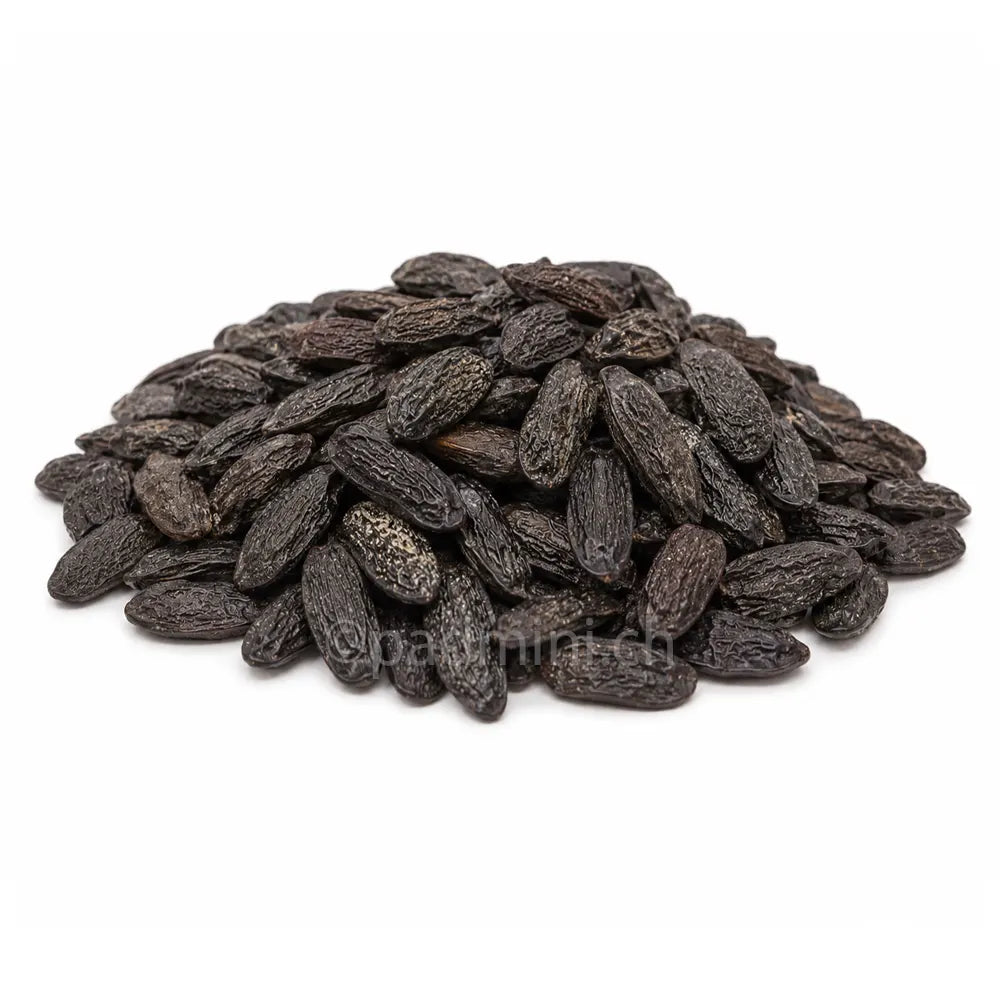
Whole Tonka Beans 25 g – Dipteryx odorata for Incense Burning
Whole Tonka Beans 25 g – Dipteryx odorata for Incense Burning
0202
Couldn't load pickup availability
Product description
Whole tonka beans (Dipteryx odorata) are the aromatic seeds of the South American tonka tree, also known as cumaru. Their exceptional fragrance is warm, soft and enveloping, with characteristic notes of vanilla, almond and dried hay. When burned as incense, spicy and slightly earthy facets also emerge. In contemporary incense practices, tonka beans are particularly associated with love, luck, prosperity and wishes.
Dipteryx odorata belongs to the Fabaceae family and is native to northern South America. The whole tonka beans offered here come from Brazil. The dried seed is the part used; tonka beans are therefore neither a resin nor an incense wood.
For incense burning only. Not suitable for consumption or culinary use.
From South America to the world of perfumery
Due to its intense aroma, the tonka bean became an important source of fragrance. Its scent is distinctly reminiscent of vanilla, which is why tonka was historically also used as an aromatic alternative to vanilla. Particularly characteristic is its natural content of coumarin, a fragrance compound with distinctive associations of fresh or dried hay and almond-like sweetness.
In the 19th century, coumarin was isolated from tonka beans and was later produced synthetically. The fragrance compound played an important role in the development of modern perfumery, particularly in classic fougère accords. Tonka is also one of the characteristic fragrance materials in the French perfumery tradition of Guerlain.
Natural tonka beans, tonka absolute and synthetic coumarin are not, however, the same thing. They are olfactorily related but differ as raw materials and should not be considered equivalent.
Vanilla, almond and dried hay
Tonka beans have a warm, soft and gently vanilla-like fragrance with pronounced almond and hay notes. The fragrance profile may also reveal nuances reminiscent of light tobacco in perfumery. When burned as incense, this sweet, aromatic character is accompanied by spicy, slightly caramelised and subtly bitter or earthy facets.
The perceived sweetness describes the fragrance only and is not an indication of taste or suitability for use as food. Likewise, the aroma of a burned tonka bean differs from the fragrance of tonka absolute or a composed perfume.
Tonka beans can be used as an aromatic component for incense burning and combined with other incense materials. Due to their intense fragrance character, sparing use is recommended. A heat-resistant incense vessel and good ventilation are advisable; the smoke should not be inhaled directly.
Love, sensuality and harmony
In contemporary esoteric and ritual practices, the tonka bean is particularly associated with love, affection and sensuality. Burning tonka as incense can accordingly accompany a symbolic intention of closeness and connection. Its warm, enveloping fragrance is also associated with harmony and a comforting atmosphere.
Luck, prosperity and wishes
Another widespread symbolism associates tonka beans with luck, money, prosperity and abundance. In some contemporary practices, the beans are carried as good-luck charms or used in rituals whose intention is personal or material prosperity.
Particularly characteristic is the concept of the tonka bean as a “wishing bean”. In corresponding esoteric practices, it symbolically represents wishes, hopes and personal goals. These ideas belong to the realm of spiritual and ritual traditions and do not mean that tonka beans fulfil wishes or actually bring about prosperity, love or luck.
Such contemporary associations should not be presented indiscriminately as ancient Amazonian traditions. Available descriptions primarily document their contemporary prevalence in esoteric and ritual practices.
- Botanical name: Dipteryx odorata
- Family: Fabaceae
- Plant part used: seed
- Origin of the current product: Brazil
- Form: whole, dried tonka beans
- Fragrance when burned: warm, soft, vanilla-like and almond-like with hay, spice and slightly earthy nuances
- Use: exclusively for incense burning and incense blends
- Net weight: 25 g
For incense burning only. Not suitable for consumption or culinary use.