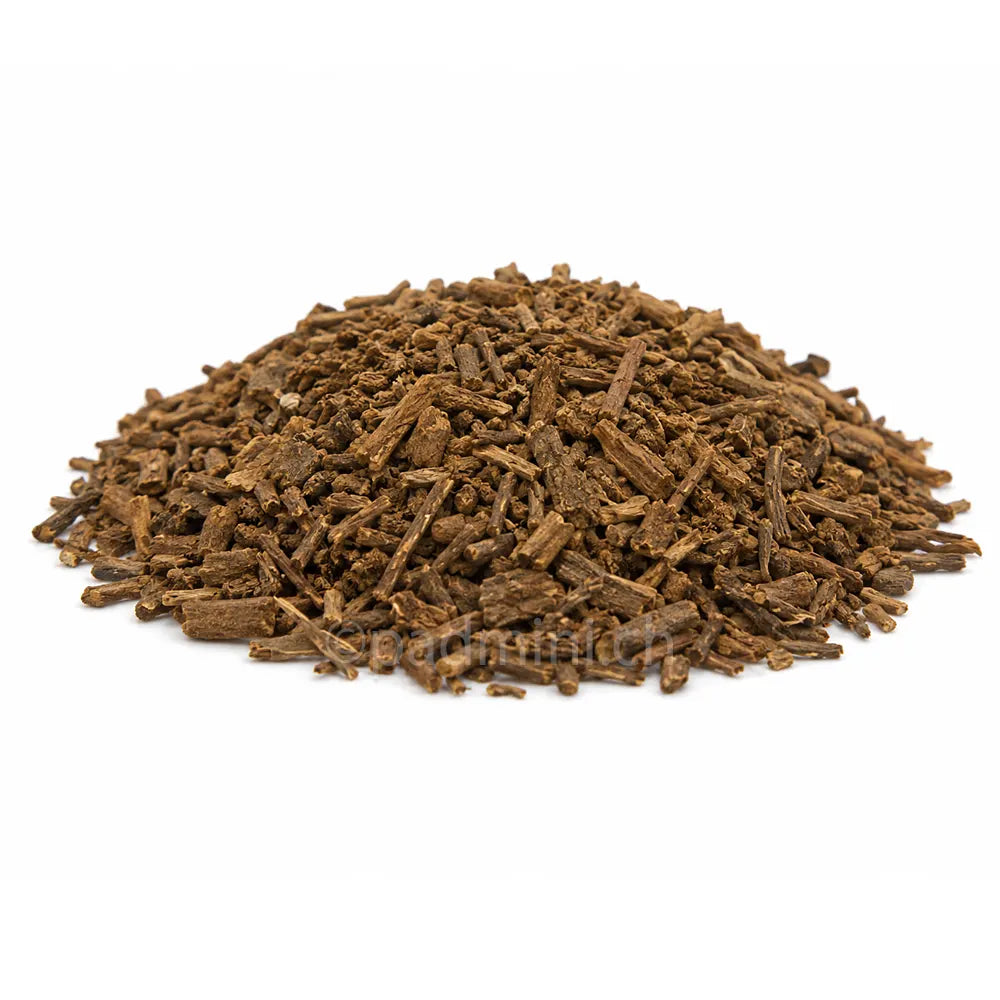
Valerian Root 50 g – Valeriana officinalis for Incense Burning
Valerian Root 50 g – Valeriana officinalis for Incense Burning
1145
Couldn't load pickup availability
Product description
Valerian root (Valeriana officinalis) is a traditional European plant with an exceptionally strong and unmistakable smell. The dried, cut root is now also used for incense burning and has a distinctly earthy and root-like fragrance character.
Valeriana officinalis belongs to the Caprifoliaceae (honeysuckle) family and is native from Europe to north-western Iran. The root currently offered here comes from Poland; the country of origin may vary depending on availability and harvest.
A plant with a long European tradition
Valerian has a long history in European herbal traditions. Various valerian species are mentioned as early as Greek and Roman antiquity, although the plants described at the time cannot always be clearly identified as Valeriana officinalis. Valerian later became firmly established in European herbal traditions and in the herbals of the Middle Ages and Renaissance.
In traditional European herbal medicine, the root in particular is known for its use in connection with nervousness and sleep problems. This medicinal tradition concerns appropriate preparations of the plant and is mentioned here solely for historical context. It cannot be applied to burning the root or inhaling its smoke.
An intense and unusual fragrance
Dried valerian root has a very strong, penetrating and distinctive smell. Earthy and root-like notes are clearly predominant, accompanied by a characteristic animalic component that can sometimes be reminiscent of fermentation. This fragrance may be fascinating, but it can equally be surprising or perceived as unpleasant.
The distinctive character of the root also remains predominant when burned as incense. It is therefore advisable to begin by placing only a small amount on suitable incense charcoal. Valerian can be used on its own or as an ingredient in an incense blend. A heat-resistant incense vessel and good ventilation are recommended.
Valerian as a protective plant in folk belief
Alongside its use in herbal traditions, valerian had a reputation in European folk belief, particularly in German-speaking regions, as a protective plant. According to old traditions, it was believed to keep witches, evil spirits and even the devil away. Its strikingly strong root scent was also associated with the ability to ward off harmful influences.
Folk customs have also been recorded in which valerian was used together with other plants to protect the home, stable and livestock. Not all of these practices involved burning the plant, however; valerian was also hung up or carried, for example.
In contemporary incense practices, this ancient symbolism of protection is sometimes continued. Valerian is used in incense rituals intended, according to these beliefs, for the symbolic protection of the home and to keep negative influences away. Grounding, inner focus or preparation for meditation may also be central ritual intentions. These associations belong to the realm of traditional and contemporary beliefs and do not represent scientifically proven effects.
Why some cats love valerian
Valerian has another unusual characteristic: the smell of the unburned root can provoke noticeable reactions in some cats. They may rub against it, roll around or show pronounced enthusiasm, much as they do with catnip. This sensitivity varies between individuals – other cats do not react at all.
This particular characteristic relates to the smell of the root and is not a reason to expose cats to smoke. The valerian offered here is intended as an incense material; the root, incense charcoal and hot incense vessels should be kept out of reach of animals.
- Botanical name: Valeriana officinalis L.
- Family: Caprifoliaceae (honeysuckle family)
- Plant part used: root
- Origin of the current product: Poland
- Form: cut, dried root
- Fragrance: intense, earthy, root-like and distinctly unusual
- Use: for incense burning, on its own or in incense blends
- Net weight: 50 g