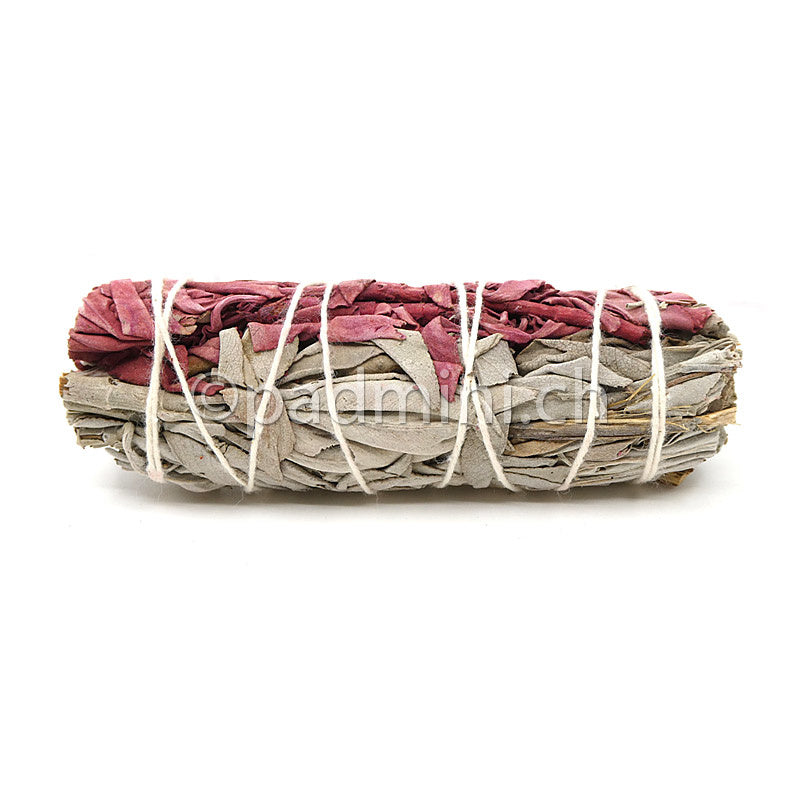
White Sage, Blue Sage & Dragon's Blood Smudge Stick 10 cm
White Sage, Blue Sage & Dragon's Blood Smudge Stick 10 cm
1747
Couldn't load pickup availability
Product description
This approximately 10 cm long White Sage, Blue Sage and Dragon's Blood smudge stick combines two aromatic incense plants with a red resin coating. The dried leaves and stems are gathered into a compact, cylindrical bundle and tied with string. Some of the White Sage leaves have been dipped into a preparation containing Dragon's Blood resin, giving them their striking red colour. In contemporary spiritual incense burning practices, this combination is particularly associated with symbolic cleansing, protection and the affirmation of personal intentions.
Spiritual Significance – Cleansing, Protection and Prosperity
White Sage – cleansing and warding off negative energies: White Sage (Salvia apiana) is used in ceremonies by various Indigenous communities of North America, particularly in the western part of the continent, for the ritual cleansing of people, objects and places. Its smoke may accompany prayers and preparations for spiritual practices. The customs and their meanings vary between communities.
In contemporary spiritual incense burning practices, White Sage symbolises the cleansing of one's surroundings, the release of burdensome influences and the dispelling of negative energies. Burning it as incense may, for example, express the desire to clear a living space of unwanted influences and create a protected, peaceful atmosphere.
Blue Sage – protection, success and prosperity: Various symbolic meanings are attributed to Blue Sage in contemporary spiritual incense burning practices. These include symbolic cleansing, spiritual protection and the intention of welcoming success and prosperity.
In this context, Blue Sage may be used during personal rituals accompanied by good wishes for a particular undertaking, a career change or a new stage in life. The associations with success and prosperity represent spiritual intentions rather than guaranteed outcomes.
As different plants are sold under the commercial name Blue Sage, these symbolic associations cannot automatically be attributed to a particular botanical species or Indigenous tradition.
Dragon's Blood – protection and affirmation of ritual intentions: Dragon's Blood is the commercial name for intensely red plant resins of different botanical origins. In various esoteric incense burning practices, it is associated with protection, warding off unwanted influences and symbolically strengthening personal ritual intentions.
The red resin coating therefore complements this bundle not only visually but also through the spiritual meanings attributed to Dragon's Blood. During protective rituals, the resin may symbolise the conscious affirmation of a wish or personal intention.
Three Components with Complementary Symbolism
What makes this smudge stick distinctive is the combination of symbolic cleansing, protection and positive intentions for the future. White Sage primarily represents ritual cleansing and the release of negative influences. Blue Sage complements this meaning through its contemporary associations with spiritual protection, success and prosperity. Dragon's Blood adds the symbolism of warding off unwanted influences and affirming ritual intentions.
When burned together as incense, these ideas can be brought into a single ritual: consciously leaving burdensome experiences behind, symbolically protecting one's surroundings and looking towards new possibilities with confidence.
The bundle may, for example, accompany a symbolic house cleansing, the preparation of a meditation space or a personal protection ritual. Before a new professional undertaking, when moving into a new home or at the beginning of a new stage in life, burning it as incense may also serve as an expression of good wishes and personal goals.
The combination of the two types of Sage with Dragon's Blood should be understood as a contemporary blend of incense materials. It is not presented as a traditional ceremonial preparation passed down by any particular Indigenous community.
Fragrance Profile – Aromatic Herbs and Resinous Smoky Notes
When smouldering, the bundle releases a strong, herbaceous and slightly camphor-like fragrance with an additional resinous component. The aromatic White Sage leaves define its botanical character, while the Dragon's Blood coating may add another dimension to the smoke's fragrance.
White Sage has an intense, spicy herbal fragrance with characteristic camphor-like accents. As it is heated, increasingly warm and smoky notes develop.
The fragrance of Dragon's Blood resin may vary depending on its botanical origin and the composition of the preparation used. The red colour alone provides no reliable indication of the resin's fragrance intensity or precise aromatic character.
The fragrance contribution of Blue Sage also depends on the plant species used. Overall, this smudge stick combines the pronounced herbal character of White Sage with resinous and smoky notes.
Botanical Characteristics and Composition
White Sage (Salvia apiana) belongs to the mint family (Lamiaceae) and is native to western North America. Its silvery-grey, aromatic leaves are characteristic of this plant.
Various plants are sold under the name Blue Sage. Without a clear botanical identification, the species used cannot be reliably determined. For this reason, no scientific species name is given for the Blue Sage contained in this bundle.
Dragon's Blood refers to red plant resins of different origins. These include, for example, resins from the genera Daemonorops, Dracaena and Croton. The precise botanical origin of the resin used here has not been identified.
A distinctive feature of this product is its partial red resin coating. The entire bundle is not coated with Dragon's Blood: some of the Sage leaves are coloured red, while other leaves and stems retain their natural grey-green or brownish colouring.
The dried plant materials are tied together into a cylindrical bundle. The different textures of the leaves and the red resin coating give each smudge stick a slightly individual appearance.
How to Use the Smudge Stick
This smudge stick is used directly, without additional incense charcoal. Briefly light one end until an ember forms, then carefully blow out the open flame. The dried plants should continue to smoulder slowly, releasing their aromatic smoke.
Always hold a fireproof bowl beneath the bundle during use to safely collect falling ash, smouldering plant fragments and any resin particles. The different plant materials and partial resin coating may cause variations in the way the bundle smoulders.
The entire bundle does not need to be consumed in a single session. After a short incense burning session, it can be carefully extinguished and stored for later use.
To extinguish it, gently press the smouldering end into sand or smother the embers in a suitable fireproof vessel. Afterwards, carefully check that no glowing embers remain inside the bundle. Allow it to cool completely before storing it.
Safety precautions: Use a heat-resistant surface and ensure adequate ventilation. Avoid inhaling the smoke directly. Keep the smudge stick away from flammable materials, children and pets, and never leave it smouldering unattended. Pay particular attention to any falling, glowing resin particles.
Product Details
- Product name: White Sage, Blue Sage and Dragon's Blood
- Botanical name of White Sage: Salvia apiana
- Blue Sage: Botanical species not precisely identified
- Dragon's Blood: Red plant resin, botanical origin not precisely identified
- Composition: Dried White Sage and Blue Sage leaves and stems, with some Sage leaves coated in Dragon's Blood resin
- Form: Compact, cylindrical incense bundle (Smudge Stick), tied with string
- Length: Approx. 10 cm
- Fragrance: Strong, herbaceous, slightly camphor-like, resinous and smoky
- Use: For direct smouldering without incense charcoal
- Sales unit: 1 bundle
As this is a natural product, the colour, shape and dimensions of the smudge sticks may vary slightly. The distribution of the red resin coating and the proportions of the plant materials used may also differ from one bundle to another.