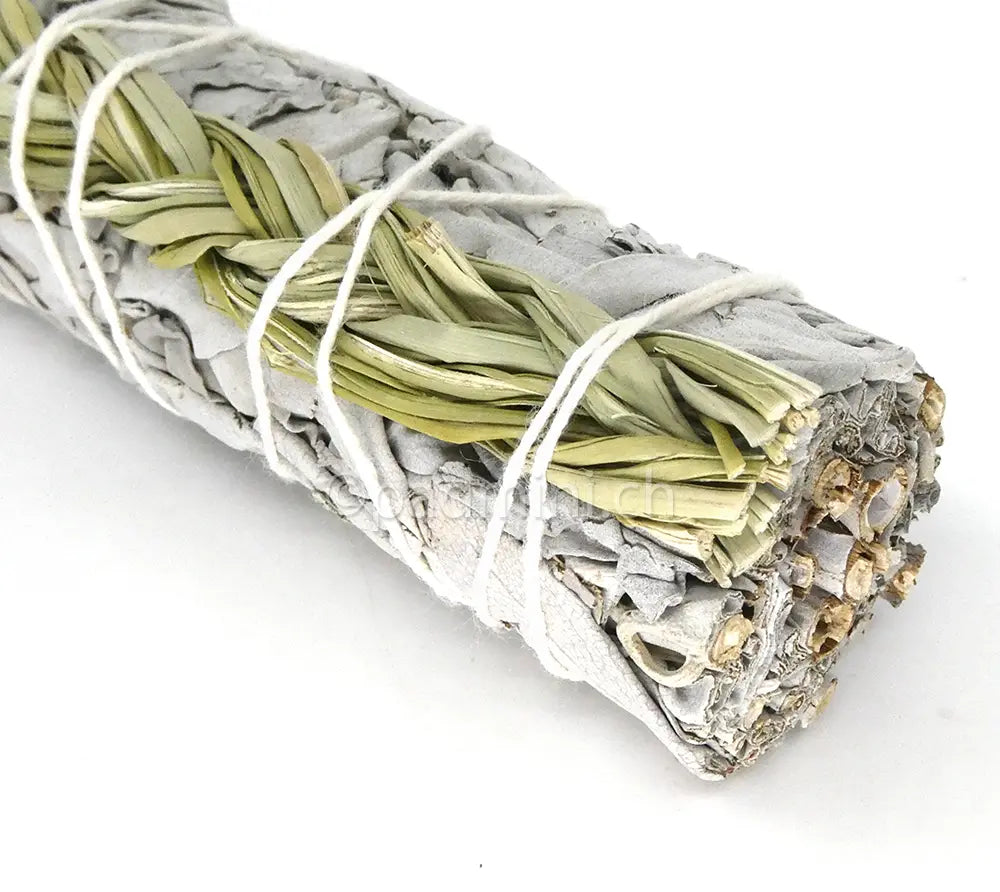
White Sage & Sweetgrass Smudge Stick 10 cm
White Sage & Sweetgrass Smudge Stick 10 cm
1269
Couldn't load pickup availability
Product description
This approximately 10 cm long smudge stick made from White Sage (Salvia apiana) and Sweetgrass (Hierochloe odorata) combines two aromatic plants that hold particular significance in various spiritual traditions of North America. The dried sage leaves and Sweetgrass blades are gathered into a compact, cylindrical bundle and tied with string. When smouldering, the strong, herbaceous fragrance of White Sage blends with the soft, sweet hay-like and vanilla notes of Sweetgrass.
Spiritual Significance – Cleansing, Protection and Positive Energies
White Sage – cleansing and protection: White Sage is used in ceremonies by various Indigenous communities in North America, particularly in the western part of the continent, for the ritual cleansing of people and places. Its smoke may accompany prayers and preparations for spiritual practices. The specific customs and meanings vary between individual communities.
In contemporary spiritual incense burning practices, White Sage is particularly associated with the symbolic cleansing of living spaces and objects and the dispelling of negative energies. Its smoke is used with the intention of releasing burdensome influences, keeping unwanted energies at bay and creating a protected, harmonious atmosphere.
Sweetgrass – peace, goodwill and protection: Sweetgrass, also known as Sweet Vernal Grass, holds an important place in the spiritual traditions of various Indigenous peoples of North America. It is used during prayers, ceremonies and ritual cleansing practices and is associated with protection, peace, gratitude and goodwill.
One distinctive aspect of Sweetgrass is its symbolic association with welcoming good spirits, benevolent forces and positive energies. In certain traditions, its fragrant smoke accompanies the intention of creating a peaceful, welcoming atmosphere and consciously inviting positive influences.
However, Sweetgrass is not used exclusively to attract positive influences. In various traditions, it also has its own distinct meanings associated with spiritual cleansing and protection.
Two Plants with Complementary Symbolism
What makes this smudge stick distinctive is the combination of symbolic cleansing and the welcoming of positive influences. While White Sage is associated with releasing negative energies and cleansing the surrounding environment, Sweetgrass complements this intention through its associations with goodwill, peace, gratitude and harmony.
In some contemporary incense burning practices, White Sage and Sweetgrass are used in succession: first, the sage accompanies the symbolic removal of unwanted influences, while Sweetgrass then represents the invitation of benevolent forces. However, this sequence is not a universally prescribed practice within Indigenous traditions.
In this smudge stick, both plants smoulder together. Their two symbolic intentions are therefore brought together in a single incense burning ritual: letting go of burdens while simultaneously making room for positive thoughts, peace and new possibilities.
This combination can accompany symbolic house cleansing, moving into a new home, preparing a meditation space or personal prayer. It can also be used to express personal intentions when consciously embracing a new beginning or during a moment of gratitude.
White Sage and Sweetgrass in North American Traditions
Both plants have their own distinct cultural backgrounds. White Sage (Salvia apiana) is native to western North America and is used particularly in the ceremonies of certain Indigenous communities in this region.
Sweetgrass (Hierochloe odorata), by contrast, is also found outside North America. It belongs to the grass family (Poaceae) and is now also botanically recognised under the accepted name Anthoxanthum nitens.
Sweetgrass holds particular significance in the traditions of various Cree and Anishinaabe communities, among others. In certain Anishinaabe teachings, it is one of the four sacred plants, alongside tobacco, sage and cedar. In this context, it is especially associated with goodness, kindness and goodwill. Other Indigenous communities have their own meanings and ceremonies.
In various traditions, Sweetgrass is woven into long braids, which may carry particular symbolic significance. However, the product offered here is a combined smudge stick made from White Sage and Sweetgrass, not a traditional Sweetgrass braid.
The cultural significance of both plants helps explain their use in spiritual incense burning practices. Their combination in this bundle is understood as a contemporary preparation and is not presented as a traditional recipe passed down by any particular Indigenous community.
Fragrance of White Sage and Sweetgrass
When smouldering, this smudge stick releases an aromatic, strongly herbaceous fragrance with warm, sweet and slightly vanilla-like nuances. The two plants have distinctly different fragrance profiles that complement each other when burned together.
White Sage contributes its characteristic spicy, herbaceous and slightly camphor-like notes. Sweetgrass enriches the fragrance with its soft aromas reminiscent of dried hay and vanilla, accompanied by a subtle honey-like accent.
The characteristic fragrance of Sweetgrass is partly due to the coumarin it naturally contains. As the plants smoulder, their sweet botanical notes blend with the stronger herbal aromas of the sage and increasingly warm, smoky nuances.
Compared with a bundle containing only White Sage, the Sweetgrass adds a softer, sweet, hay-like fragrance component to the incense burning experience. How noticeable this becomes depends on the proportions of the two plants and the conditions under which they smoulder.
How to Use the Smudge Stick
Briefly light one end of the bundle, then carefully blow out the open flame. The dried sage leaves and Sweetgrass blades should continue to smoulder slowly, releasing their aromatic smoke.
Always hold a fireproof bowl beneath the bundle during use to safely collect falling ash and any glowing embers. During a personal incense burning ritual, the smoke can be carefully distributed around the room.
The bundle does not need to be completely consumed in a single session. After a brief burning session, it can be carefully extinguished and kept for later use.
To extinguish it completely, gently press the smouldering end into sand or smother the embers in a suitable fireproof vessel. Afterwards, check that no glowing embers remain inside the bundle. Allow it to cool completely before storing it.
Safety precautions: Use a heat-resistant surface and ensure adequate ventilation. Avoid inhaling the smoke directly. Keep the smudge stick away from flammable materials, children and pets, and never leave it smouldering unattended.
Product Details
- Plants: White Sage and Sweetgrass (Fragrant Sweetgrass)
- Botanical names: Salvia apiana and Hierochloe odorata (currently accepted name for Sweetgrass: Anthoxanthum nitens)
- Origin of the White Sage: California, USA
- Material: Dried sage leaves and Sweetgrass blades
- Form: Cylindrical incense bundle (Smudge Stick), tied with string
- Length: Approx. 10 cm
- Fragrance: Strong, herbaceous, slightly camphor-like, sweet, hay-like and vanilla-like
- Use: For direct smouldering during incense burning rituals
- Sales unit: 1 bundle
As this is a natural product, the colour, shape and dimensions of the bundles may vary slightly. The proportion of White Sage to Sweetgrass may also differ from one bundle to another.