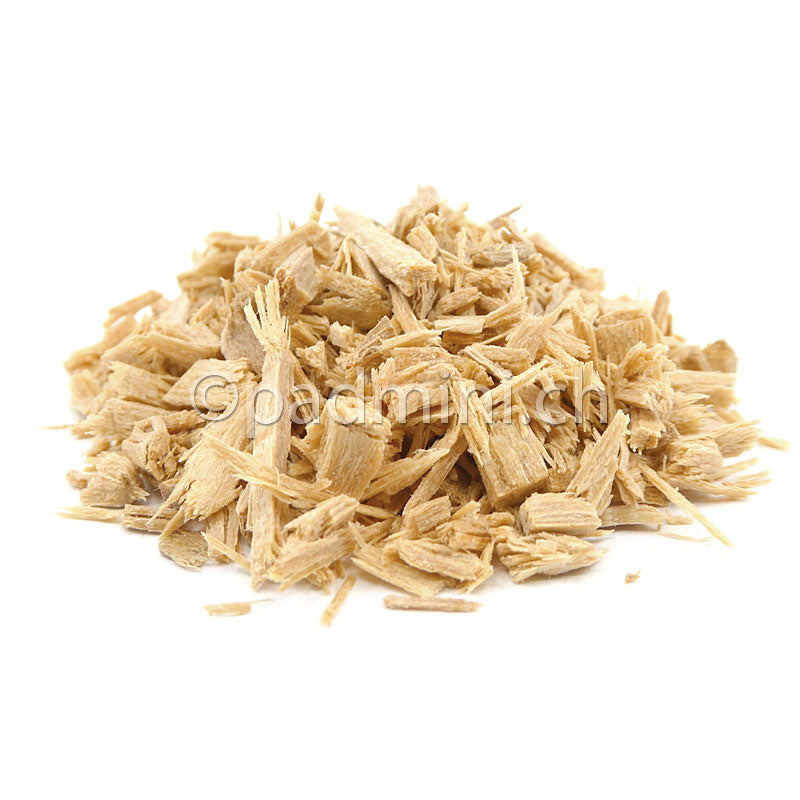
White Sandalwood Chips 20 g – Santalum album from India
White Sandalwood Chips 20 g – Santalum album from India
0594
Couldn't load pickup availability
Product description
Cut white sandalwood (Santalum album) from India is one of Asia’s classic and most traditional incense woods. The small wood chips develop a warm, soft and characteristically sweet-woody fragrance with creamy and balsamic nuances when burned as incense. Sandalwood can be used on its own or as a harmonious base for incense blends with natural resins and other aromatic plant materials.
Santalum album, also known as Indian or white sandalwood, belongs to the Santalaceae family. The evergreen tree is native to parts of South and Southeast Asia and has been valued for centuries for its exceptionally aromatic wood. The sandalwood chips offered here come from India and are intended for incense burning.
An important incense wood of India
Sandalwood has an exceptionally long cultural and religious tradition in India. Its aromatic wood and the sandalwood paste made from it play an important role particularly in Hinduism. Sandalwood is used for religious ceremonies, offerings and the production of incense and is closely associated with temple culture and spiritual practice.
Sandalwood is also one of the valued aromatic materials in Buddhism. For centuries, its fragrance has been incorporated into incense used to accompany religious ceremonies, meditation and personal devotion. This long history of use has made Santalum album one of the best-known incense woods of all.
Warm, soft and sweet-woody
When burned as incense, white sandalwood releases a warm, soft and sweet-woody fragrance with creamy and balsamic nuances. Unlike many strongly resinous or spicy incense materials, its fragrance is rounded and balanced and can remain noticeable in the room for a long time.
The cut wood chips can be placed directly on suitable incense charcoal or, for particularly gentle heating, used on an incense burner with a mesh screen. When using charcoal, it is best to add the sandalwood only once the charcoal is fully glowing and no longer excessively hot. If exposed to too much heat, the wood can burn quickly, whereas gentler heating allows its characteristic fragrance to develop more fully.
A classic base for incense blends
White sandalwood can be combined very versatilely with other incense materials. Particularly classic blends are created with frankincense or myrrh: the soft, warm wood provides a calm aromatic background for the more pronounced resinous notes.
Sandalwood also combines well with spices, aromatic plants and other natural resins. Thanks to its harmonious fragrance profile, it can add warmth and depth to a blend without completely overpowering the other ingredients.
Calm, meditation and spiritual contemplation
Sandalwood’s long religious history also shapes its contemporary symbolism. In various incense traditions, its fragrance is associated with calm, inner contemplation and meditation. Sandalwood is therefore often used for incense burning intended to accompany prayer, meditation or a consciously peaceful atmosphere.
In contemporary spiritual practices, sandalwood is also associated with harmony, peace and symbolic purification. Such meanings should be understood as cultural and spiritual associations and do not represent proven effects of sandalwood smoke.
- Botanical name: Santalum album L.
- Family: Santalaceae
- Other names: white sandalwood, Indian sandalwood
- Plant part used: wood
- Origin of the product: India
- Form: cut wood chips
- Fragrance when burned: warm, soft, sweet-woody, creamy and balsamic
- Use: for incense burning, on its own or in incense blends
- Net weight: 20 g